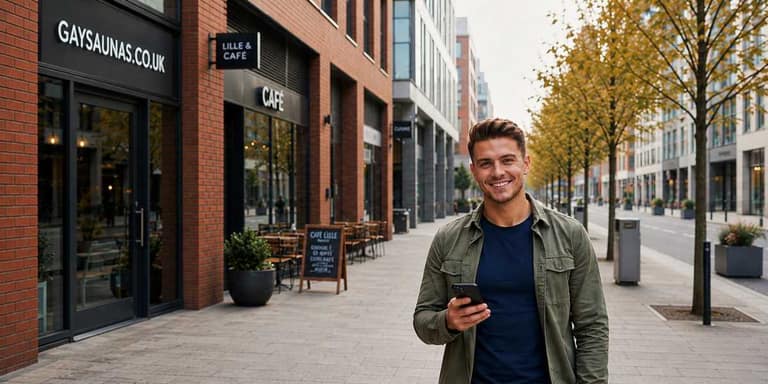
Find Gay Saunas Across the UK
Find nearby venues to easily compare opening times, entry prices and facilities. Results are automatically sorted by distance.
Last verified on 29 | 09 | 2026Location data is never stored.
No location selected yet.
Updated Hourly
Most Viewed
See which saunas are attracting the most attention right now.
The Sauna Reports
First visit guides
New to saunas? Start here.

How to Prepare for Your First Gay Sauna Visit | UK Guide
Why read it: Everything to sort before your first gay sauna visit: sexual health, what to pack, body confidence, timing, and nerves. Plain-spoken UK answers.

Who Can Go to a Gay Sauna?
Why read it: Gay saunas welcome all men — gay, bi, curious, or questioning. UK guide covering trans inclusion, disability access, body image, HIV, and what to expect.

Arriving at a Gay Sauna: What Happens in the First 15 Minutes
Why read it: Step-by-step guide to your first 15 minutes at a UK gay sauna — from buzzer to locker to towel. Know exactly what happens at check-in.

Gay Sauna Facilities Explained: What Every Room Is For | UK Guide
Why read it: What every room in a UK gay sauna is for — from steam rooms and jacuzzis to dark rooms, glory holes, and sling rooms. Full facility guide series.

Gay Sauna Etiquette and Consent
Why read it: Master UK gay sauna etiquette and consent culture—from non-verbal signals to handling rejection. The unwritten rules that make shared intimate space work.

Health & Safety at Gay Saunas: The 2026 UK Guide
Why read it: PrEP, doxyPEP, vaccines, testing, consent, heat safety and chemsex — the complete UK health and safety guide for gay sauna visitors. Updated March 2026.
The basics
What Is a Gay Sauna?
A gay sauna - also called a men's sauna, male sauna, or gay bathhouse - is a private venue for men who have sex with men. Every UK gay sauna includes wet facilities like steam rooms, dry saunas, and showers.
These venues are open to gay, bisexual, bi-curious, and questioning men. You don't need to identify as anything to visit.
Good to know
Common Questions
Do you have to be gay?
No. UK gay saunas welcome men of all sexual orientations - gay, bisexual, bi-curious, and questioning. No venue asks you to identify or explain yourself.
Can you go on your own?
Yes - most people do. Venues are designed for solo attendance: single-occupancy lockers, individual towels, no plus-one required.
Do you have to have sex?
No. Sexual activity is available but never expected, required, or assumed. Many visitors use only the wet facilities - steam rooms, saunas, jacuzzis.
What do you need to bring?
Photo ID and a way to pay. Most venues provide a towel, locker, and basic toiletries with your entry fee. You're in control the entire time.
Browse venues
Directory
Primary
Home & Search
The UK’s gay sauna directory and guide. Verified opening times, prices and reviews for every venue, plus clear guides on etiquette, consent and sexual health.
Primary
Find a sauna
Find the nearest gay sauna to your location right now. Our live UK locator covers the whole of the UK — see opening hours, entry prices and facilities.
Directory
Every gay sauna in the UK
The most comprehensive directory of gay saunas across England, Scotland, Wales, and Northern Ireland. Current prices, opening hours, facilities…
Guides
All Sauna Guides
New to the scene? Our comprehensive gay sauna guides cover everything from what to pack and locker room etiquette to consent, safety, and overcoming nerves.
More
Sauna FAQs
Clear beginner answers about what gay saunas are, what to bring, consent, boundaries, hygiene, safer sex and first-time nerves.
More
About us
Gaysaunas.co.uk is the UK’s free, private gay sauna directory — verified prices, reviews, a live locator, and beginner guides. No sign-up needed.
More
Events
Browse UK gay sauna event brands and organisers in one place, with direct links to their own websites for current dates, tickets and details.
More
Add/Update a Sauna
Get in touch with GaySaunas.co.uk for venue listing updates, event organiser enquiries, advertising and editorial feedback. UK-based directory.
Homepage linked
Privacy
This Privacy Policy describes how GaySaunas.co.uk (“we”, “us”, or “our”) collects, uses, and shares your personal information when you visit our website.
Homepage linked
Terms
This Terms & Conditions agreement is designed for a directory and review site like GaySaunas.co.uk. It clarifies that you provide information only and are not responsible for the actual operation of the venues listed.
Guides
Advanced Sauna Advice
Beyond the basics: honest UK advice on sauna costs, body confidence, disability access, trans inclusion, couples, and knowing when your pattern needs a reset.
Guides
After Your Visit
Your after-visit checklist: PEP timelines, STI testing windows, emotional aftercare, and UK support. A practical guide from people who know.
Guides
Arriving at a Gay Sauna
Step-by-step guide to your first 15 minutes at a UK gay sauna — from buzzer to locker to towel. Know exactly what happens at check-in.
Guides
Etiquette and Consent
Master UK gay sauna etiquette and consent culture—from non-verbal signals to handling rejection. The unwritten rules that make shared intimate space work.
Guides
Gay Sauna Facilities
What every room in a UK gay sauna is for — from steam rooms and jacuzzis to dark rooms, glory holes, and sling rooms. Full facility guide series.
Guides
Going Alone or With a Friend
Most gay sauna visitors go alone. Find out how to decide between solo and with a friend, what each option actually involves, and how to prepare.
Guides
Health and Safety
PrEP, doxyPEP, vaccines, testing, consent, heat safety and chemsex — the complete UK health and safety guide for gay sauna visitors. Updated March 2026.
Guides
History of Gay Saunas
UK gay saunas were built under threat of prosecution and survived the AIDS crisis. How they got here — and why they still matter.
Guides
Who’s Welcome at Gay Saunas
Gay saunas welcome all men — gay, bi, curious, or questioning. UK guide covering trans inclusion, disability access, body image, HIV, and what to expect.
Guides
Preparing for Your First Visit
Everything to sort before your first gay sauna visit: sexual health, what to pack, body confidence, timing, and nerves. Plain-spoken UK answers.
Guides
Sexual Health Resources
Verified UK sexual health services, crisis helplines, PrEP access, and LGBT+ support for gay and bisexual men. Free NHS clinics, testing, and vaccinations.
Homepage linked
England 34 venues
From multi-floor complexes in London and Manchester to well-established local favourites in Birmingham, Leeds, Brighton, and beyond. Every venue listed with…
Homepage linked
Birmingham
Two Birmingham listings: Yumbo at Hockley Hill and Spartan Health Club in Erdington. Just For You’s former Summer Hill Road venue is closed.
Homepage linked
Blackpool
Two venues in Blackpool town centre. Acqua Sauna and W3 Sauna, both verified with current prices, hours, and facilities.
Regions
East Midlands
Explore the best gay saunas in the East Midlands for 2026. Get up-to-date entry prices, opening hours, and venue reviews for Nottingham, Leicester, Derby…
Homepage linked
Leeds
Find your nearest Leeds gay sauna instantly—complete listings, snapshot reviews & over 100 expert guides for safer, steamy fun at GaySaunas.co.
Regions
London
Six venues across Soho, Covent Garden, Waterloo, Kennington and East London. Every listing verified with current prices, hours…
Regions
North East
Two venues serving the North East region: Number 52 Sauna in Newcastle and Greenhouse Sauna in Luton. Every listing verified with current prices, hours…
Regions
North West
Eight venues across Manchester, Blackpool, Merseyside, Bury, Shaw, Northwich and Carlisle. Every listing verified with current prices, hours, and facilities.
Regions
South East
Explore the best gay saunas in South East England with our 2026 guide. Find latest entry prices, opening hours, and reviews for venues in Brighton, Hove…
Regions
South West
Four gay saunas across Plymouth, Bournemouth, Torquay and Swindon, plus Redruth’s Monday social and play club in Cornwall. Redruth has no sauna or hot tub.
Yorkshire & Humberside
South Yorkshire
ClubZeus Sheffield is open at 208 Savile Street East. Current opening hours, membership, prices and facilities, with the former Boiler Room listing preserved.
M–S
Sheffield
The Boiler Room Sheffield has closed. Its premises reopened as ClubZeus Sheffield under new owners on 21 August 2026. Find the new venue listing.
Regions
West Midlands
Four venues across Birmingham, Stourbridge and Darlaston, including Yumbo at Hockley Hill. The former Just For You premises are closed.
Yorkshire & Humberside
West Yorkshire
West Yorkshire venue listings and visitor information. Steam Complex is temporarily closed pending relocation; see current open alternatives.
Homepage linked
Northern Ireland 1 venue
Explore the premier gay sauna in Northern Ireland for 2026. Get the latest entry prices, opening hours, and venue details for Outside Sauna in Belfast.
Yorkshire & Humberside
Scotland
Explore the top gay saunas in Scotland for 2026. Get up-to-date entry prices, opening hours, and venue reviews for Glasgow’s Pipeworks and Edinburgh’s…
Yorkshire & Humberside
Wales
Greenhouse Sauna in Newport is Wales’ only dedicated gay sauna. Full listing with current prices, opening hours, and facilities verified for 2026.
Blackpool
Acqua Sauna Blackpool
Verified on 2 Aug 2026. Latest prices, opening times, events, facilities and reviews.
Manchester
Basement Complex Manchester
Verified on 4 Sep 2026. Opening times, non-age-based prices and events checked.
Mansfield
Club Zeus Sauna Mansfield
Verified on 2 Aug 2026. Latest prices, opening times, events, facilities and reviews.
London
Covent Garden Health Spa London
Verified on 2 Aug 2026. Latest prices, opening times, events, facilities and reviews.
New Brighton
Dolphin Sauna Merseyside
Verified on 2 Aug 2026. Latest prices, opening times, events, facilities and reviews.
London
E15 Club London
Verified on 2 Aug 2026. Latest prices, opening times, events, facilities and reviews.
Hull
Gentry Spa Hull
Verified on 2 Aug 2026. Latest prices, opening times, events, facilities and reviews.
Newport
Greenhouse Gay Sauna Newport
Verified on 4 Sep 2026. Opening times, non-age-based prices and events checked.
Luton
Greenhouse Sauna Luton
Verified on 4 Sep 2026. Opening times, non-age-based prices and events checked.
Stourbridge
Heroes Sauna Stourbridge
Verified on 29 Sep 2026. Opening times, non-age-based prices and events checked.
Birmingham
Just For You Birmingham (Closed)
Verified on 8 Sep 2026. Permanently closed; this page is retained for venue history and current alternatives.
2 Union Street
Manticore Spa Plymouth
Verified on 2 Aug 2026. Latest prices, opening times, events, facilities and reviews.
Medway
ME1 Sauna Rochester
Verified on 2 Aug 2026. Latest prices, opening times, events, facilities and reviews.
Bury
Neros Sauna Bury
Verified on 2 Aug 2026. Latest prices, opening times, events, facilities and reviews.
Newcastle
Number 52 Sauna Newcastle
Verified on 2 Aug 2026. Latest prices, opening times, events, facilities and reviews.
Belfast
Outside Sauna Belfast
Verified on 2 Jul 2026. Latest prices, opening times, events, facilities and reviews.
Shaw
Pennine Sauna
Verified on 2 Jul 2026. Latest prices, opening times, events, facilities and reviews.
Leeds
Pipeworks Leeds
Verified on 10 Sep 2026. Opening times, non-age-based prices and events checked.
Eastborough
Plastic Ivy Sauna Dewsbury
Verified on 29 Sep 2026. Opening times, non-age-based prices and events checked.
London
Pleasuredrome Gay Sauna London
Verified on 29 Sep 2026. Opening times, non-age-based prices and events checked.
London
Sailors Sauna London
Verified on 8 Sep 2026. Opening times, non-age-based prices and events checked.
Northwich
Sauna Sauna Northwich
Verified on 2 Aug 2026. Latest prices, opening times, events, facilities and reviews.
Bournemouth
SaunaBar Bournemouth
Verified on 2 Aug 2026. Latest prices, opening times, events, facilities and reviews.
Birmingham
Spartan Club Birmingham
Verified on 2 Jul 2026. Latest prices, opening times, events, facilities and reviews.
Leicester
Splash Spa Leicester
Verified on 2 Aug 2026. Latest prices, opening times, events, facilities and reviews.
Rock Road
Steamer Quay Sauna Torquay
Verified on 4 Sep 2026. Opening times, non-age-based prices and events checked.
Edinburgh
Steamworks Gay Sauna Edinburgh
Verified on 18 Jul 2026. Latest prices, opening times, events, facilities and reviews.
Nelson Street
Sweat Sauna Carlisle
Verified on 29 Sep 2026. Opening times, non-age-based prices and events checked.
London
Sweatbox Soho London
Verified on 29 Sep 2026. Opening times, non-age-based prices and events checked.
Hove
The Boiler Room Sauna Brighton
Verified on 29 Sep 2026. Opening times, non-age-based prices and events checked.
Brighton
The Brighton Sauna
Verified on 29 Sep 2026. Opening times, non-age-based prices and events checked.
Darlaston
The Greenhouse Sauna Darlaston
Verified on 2 Aug 2026. Latest prices, opening times, events, facilities and reviews.
London
The Locker Room Gay Sauna London
Verified on 2 Aug 2026. Latest prices, opening times, events, facilities and reviews.
Glasgow
The Pipeworks Glasgow
Verified on 2 Aug 2026. Latest prices, opening times, events, facilities and reviews.
9 Henry St
Touch Sauna Swindon
Verified on 4 Sep 2026. Opening times, non-age-based prices and events checked.
Portsmouth
Tropics Day Spa, Portsmouth
Verified on 2 Aug 2026. Latest prices, opening times, events, facilities and reviews.
Blackpool
W3 Sauna Blackpool
Verified on 2 Aug 2026. Latest prices, opening times, events, facilities and reviews.
Sheffield
ClubZeus Sheffield
Verified on 7 Sep 2026. Latest prices, opening times, events, facilities and reviews.
Huddersfield
Empire Cinema Club Huddersfield
Verified on 4 Sep 2026. Opening times, non-age-based prices and events checked.
Redruth
Redruth — Social & Play Club (former sauna)
Verified on 8 Sep 2026. Latest prices, opening times, events, facilities and reviews.
Birmingham
Yumbo Birmingham
Verified on 8 Sep 2026. Opening times, non-age-based prices and events checked.
Guides
Arriving at a Gay Sauna: What Happens in the First 15 Minutes
Step-by-step guide to your first 15 minutes at a UK gay sauna — from buzzer to locker to towel. Know exactly what happens at check-in.
Guides
Gay Sauna Etiquette and Consent
Master UK gay sauna etiquette and consent culture—from non-verbal signals to handling rejection. The unwritten rules that make shared intimate space work.
Guides
Cruising Mazes in Gay Saunas: What to Expect (UK Guide)
What a cruising maze is, how they work, unwritten rules, and which UK gay saunas have them. A practical guide for first-timers and regulars.
Guides
Dark Rooms in Gay Saunas: What to Expect (UK Guide)
What a dark room is, how consent works in the dark, unwritten rules, and which UK gay saunas have them. A practical guide for first-timers and regulars.
Guides
Dungeons in Gay Saunas: UK Guide to Kink & Fetish Rooms
What a dungeon in a UK gay sauna is, what equipment to expect, how play starts, the unwritten rules, and which venues have dungeon facilities.
Guides
Glory Holes in Gay Saunas — What They Are & How They Work
What glory holes are, why men use them, what to expect, and the unwritten rules. A practical guide to glory hole etiquette in UK gay saunas.
Guides
Glory Holes in Gay Saunas: Safe Etiquette Guide
Navigate glory holes in gay saunas safely with tips on consent, signalling, and hygiene—perfect for UK men seeking discreet, respectful anonymous play in…
Guides
Jacuzzis in Gay Saunas — What to Expect and How They Work
What the jacuzzi is for in a UK gay sauna, unwritten rules, what’s OK in the water, and which venues stand out. Practical guide for all visitors.
Guides
Private Cabins in Gay Saunas: What to Expect (UK Guide)
What private cabins in UK gay saunas are, how they work, door signals, and which venues offer them. A practical guide for all experience levels.
Guides
Sling Rooms in Gay Saunas: What to Expect (UK Guide)
What a sling room is, how consent works, unwritten rules, and which UK gay saunas have them. A practical guide for first-timers and regulars…
Guides
Steam Rooms in Gay Saunas: What to Expect (UK Guide)
What the steam room in a UK gay sauna is actually like — how it works, what happens, cruising signals, and which venues have one.
Guides
Gay sauna facilities explained
What every room in a UK gay sauna is for — from steam rooms and jacuzzis to dark rooms, glory holes, and sling rooms. Full facility guide series.
Guides
Going alone or with a friend?
Most gay sauna visitors go alone. Find out how to decide between solo and with a friend, what each option actually involves, and how to prepare.
Guides
Gay sauna facilities explained
What every room in a UK gay sauna is for — from steam rooms and jacuzzis to dark rooms, glory holes, and sling rooms. Full facility guide series.
Guides
How to Prepare for Your First Gay Sauna Visit
Everything to sort before your first gay sauna visit: sexual health, what to pack, body confidence, timing, and nerves. Plain-spoken UK answers.
Guides
UK Sexual Health & Support Resources for Gay & Bi Men
Verified UK sexual health services, crisis helplines, PrEP access, and LGBT+ support for gay and bisexual men. Free NHS clinics, testing, and vaccinations.
Guides
What to Do After Your Visit
Your after-visit checklist: PEP timelines, STI testing windows, emotional aftercare, and UK support. A practical guide from people who know.
Guide
Sling Rooms in Gay Saunas: What to Expect (UK Guide)
What a sling room is, how consent works, unwritten rules, and which UK gay saunas have them. A practical guide for first-timers and regulars…
In brief
- A sling room is a dedicated space in a gay sauna containing a suspended leather or fabric sling designed for sexual activity. It offers physical support and positioning that a bed, bench, or flat surface can’t replicate, and being in a sling does not signal consent to anything specific.
- Sling rooms are almost always semi-public play areas rather than private bookable rooms. Other men may be present, watching, or cruising — and the person in the sling controls who interacts with them, not the other way around.
- The sling restricts the user’s movement, which changes the consent dynamic. Approaching someone in a sling carries a higher responsibility to read signals and seek clear permission than in most other areas of the venue.
- You do not need to be into kink, BDSM, or fetish play to use or be curious about a sling room. Many men try one out of straightforward curiosity, and walking in to look without participating is completely normal.
- Who is it for? Any man (cis or trans) or non-binary person comfortable in a masculine space. You do not need to identify as ‘gay’ to visit; these venues are more accurately described as being for men who have sex with men (MSM).
01 What a Sling Room Actually Is
Physically, a sling room contains a suspended sling — typically leather or heavy-duty fabric — hung from chains attached to a ceiling-mounted frame, with stirrups or loops for the legs. Some also have wrist straps or handles. The person using the sling lies back in it, with their legs raised and supported by the stirrups, creating a reclined, open position that would be difficult or exhausting to hold without the support.
The room itself is usually small to medium-sized — enough for the sling, a couple of people standing around it, and sometimes a bench or shelf along one wall. Lighting is typically low but not dark: you can see faces and bodies clearly, which sets it apart immediately from a dark room where visibility is minimal or zero.
Most UK venues position their sling room as part of the play area — on the same floor or corridor as dark rooms, glory holes, and private cabins, but as a distinct room with its own doorway or curtain. The sling is fixed equipment, not something that gets moved around or folded away. It’s a permanent feature of the venue’s layout, and its presence signals that the room is designed for a specific type of use.
A sling is not a sex swing — the domestic product sold for home use works on a different principle and isn’t designed for the same type of activity. In a sauna context, slings are commercial-grade equipment, bolted to the ceiling, and built to take significant weight and movement safely.
02 Why Men Use Them
The practical appeal is straightforward: a sling holds your body in a position that would be difficult or tiring to maintain on a flat surface, which changes what’s physically possible and how it feels. The raised, reclined position provides access and angles that a bed, bench, or standing encounter doesn’t. For the person in the sling, it also removes the effort of holding a position — the sling does the work, which means longer, more relaxed sessions.
Beyond the mechanics, there’s a visibility element. The sling positions the user in an open, exposed way that appeals to men who enjoy being watched or who find the exhibitionist aspect of the room exciting. For the same reason, the room attracts men who prefer to watch rather than directly participate — and that’s a legitimate way to use the room.
There’s also a kink dimension, though it’s not the only reason men use slings. The sling became a fixture of gay venue culture through the leather and BDSM scene of the 1970s — documented in San Francisco clubs like The Catacombs from 1975 and New York’s Mineshaft from 1976 — though the broader bathhouse tradition predates that era.
In modern UK saunas, the association with kink persists, but the reality is broader. Plenty of men use sling rooms out of curiosity, not identity. You don’t need to own a harness or have a Recon profile to try one.
03 What to Expect When You Walk In
Sling rooms in UK gay saunas are almost always semi-public — you walk through an open doorway or curtain, not a locked door. The first thing you’ll notice is that the room is typically better lit than a dark room but dimmer than a lounge. You can see who’s there and what’s happening.
The sling dominates the room. If someone is already in it, they’ll be visible immediately. Other men may be standing around the edges of the room — watching, waiting, or simply present. The atmosphere is quieter and more focused than a dark room or maze.
If the sling is empty when you walk in, you can look at it, stand in the room, or leave. Nobody expects you to get in it just because you entered. If you want to try the sling, you get in — feet in the stirrups, lie back — and that’s the starting position. How long you stay and what happens next is entirely up to you and whoever you choose to engage with.
If someone else is already using the sling, you have three options: watch from a respectful distance, make your interest known through eye contact and proximity (the same non-verbal system used throughout the venue), or leave the room. What you don’t do is walk up and start touching someone in a sling without a clear signal that your attention is welcome.
You can leave a sling room at any point without explanation — just as you can leave any other area of the venue. Walking in and walking straight back out happens regularly and nobody reads anything into it.
04 How Consent Works Around a Sling
The single most important thing to understand about sling rooms is that a man lying in a sling has not consented to anything by being there. He has made himself physically available to a room, not to every person in it.
This matters more in a sling room than almost anywhere else in the venue, because the sling restricts the user’s movement. Getting out of a sling takes deliberate effort — you can’t simply step back or turn away the way you can in a dark room or standing encounter. That physical limitation means the person in the sling is relying more heavily on others to respect the signals, and the responsibility on anyone approaching is correspondingly higher.
The consent system works the same way as the rest of the venue — eye contact, proximity, light touch, reciprocation — but with an important difference in weighting. In a standing encounter, both people can disengage equally easily. In a sling encounter, the person standing has full freedom of movement while the person lying back does not. That asymmetry means the standing person needs to be more attentive to signals, not less.
Sweatbox Soho, one of London’s most established gay saunas, makes this explicit in its published etiquette guidance: if someone is in a sling, consent must still be sought. The fact that a major UK venue singles out slings as a separate consent rule — distinct from their dark room and glory hole guidance — tells you something about how seriously the convention is taken.
In practice, the approach sequence looks like this: you make eye contact with the person in the sling. If they hold your gaze or signal interest — a nod, a gesture, reaching towards you — you move closer. If they look away, close their eyes without engaging, or shift their body away from you, that’s a no. If you’re already close and they place a hand on your chest or push gently, that’s a stop signal. Respect it instantly.
Our full guide to gay sauna etiquette and consent covers the broader consent principles, non-verbal communication, and how to handle situations where boundaries aren’t respected. Everything in that guide applies here — the sling-specific layer is the physical vulnerability and the heightened responsibility it places on the person who isn’t in the sling.
05 The Unwritten Rules
Sling rooms run on a set of conventions that experienced visitors treat as non-negotiable, even though you won’t see them written on a wall.
Don’t assume access
A man in a sling is not offering himself to the room. He’s in a position. What happens from there depends on mutual interest, communicated in real time. The sling is not a free pass and treating it as one will get you a reputation faster than almost anything else in the venue.
Watch before you act
If you walk into a sling room and someone is already engaged with a partner, stand back and observe. Joining an encounter in progress requires a clear invitation — eye contact from one or both participants, a beckoning gesture, verbal confirmation. Uninvited physical contact with someone mid-encounter is out of line in any area of the venue, and doubly so when one person’s movement is restricted.
Disengage cleanly
If someone isn’t interested, move on immediately. Don’t hover. Don’t try again after being declined. Don’t stand close enough that your presence becomes pressure. The sling room is small, so if you’re declined, stepping back to the doorway or leaving the room entirely is the cleanest option.
Hygiene matters more with shared equipment
A sling is shared equipment. Wipe it down after use with the cleaning supplies the venue provides — most saunas stock antibacterial wipes or spray near play areas. This isn’t optional. The next person using the sling is lying in the same surface you just used, and basic courtesy means leaving it clean.
Verbal communication is more acceptable here
Unlike dark rooms where silence is the default convention, sling rooms tolerate and sometimes require more verbal communication. Checking in with someone — a quiet “is this OK?” or “do you want me to stop?” — is appropriate here in a way that might feel out of place in a pitch-black cruising area. The physical vulnerability of the person in the sling makes verbal check-ins more important, not less.
The room is not a queue
If someone is in the sling with a partner, you don’t line up and wait your turn. If the encounter finishes and the person in the sling stays there and makes eye contact with you, that’s a new interaction starting from scratch — not a continuation. Each encounter is negotiated separately.
06 How Sling Rooms Differ from Other Play Areas
A sling room is not a dark room with equipment in it — it’s a different type of space with different social expectations. Understanding the distinction helps you decide whether it’s for you. For a full overview of every facility type in a UK gay sauna, see our facilities guide.
Dark rooms are defined by the absence of light. Anonymity is the point, touch replaces sight, and encounters are often brief and unplanned. Sling rooms are lit — you can see who’s there — and encounters tend to be more deliberate, longer, and focused on the person in the sling. Our dark rooms guide covers that facility in full.
Private cabins offer a lockable door and complete control over who enters. A sling room offers neither. It’s a shared, open-access area where other people will be present. If you want the positioning of a sling with the privacy of a cabin, some venues have slings inside their dungeon or BDSM rooms — but even those are typically semi-public rather than bookable.
Open play areas are lit communal spaces where sex happens visibly, often with benches, mattresses, or platforms. Sling rooms overlap with this category but are more structured — the sling itself creates a focal point and a defined dynamic (one person in, others around) that an open play area with flat surfaces doesn’t.
Glory holes share the anonymity element with dark rooms but are physically structured around a partition wall. Sling rooms have no partition — everyone is visible, which is part of the appeal for some and a reason to avoid them for others. Our glory holes guide covers that facility separately.
07 UK Venues with Sling Rooms
Sling rooms are found in a significant number of UK gay saunas, though the setup and atmosphere vary between venues. Here are some examples that illustrate the range.
The Boiler Room in Sheffield has a sling room on its first-floor cruising area, alongside glory holes, private cabins, and cinema rooms. The sling sits within the broader play layout rather than in a fully separate room, giving it a more integrated, cruisy feel. Friday night Cumunion and Bears Night parties are when the upstairs areas are busiest.
The Brighton Sauna on Grand Parade has two dedicated sling rooms as distinct spaces within its extensive play area — separate from its two dark rooms, sixteen private cabins, and six glory hole cabins. The venue’s 24-hour weekend opening means the sling rooms see very different energy depending on whether you visit at Saturday lunchtime or 3am Sunday.
Splash Spa in Leicester includes a sling room on its upper-floor play area alongside a darkroom maze and interconnected glory holes. The first-floor layout also includes private cabins and a cinema lounge. Towels-Off Tuesdays are the venue’s busiest sessions.
Other UK venues with slings include Gentry Spa in Hull, The Boiler Room in Hove, Outside Sauna in Belfast, Steamworks in Edinburgh, W3 Sauna in Blackpool, Touch Sauna in Swindon, Pennine Sauna in Shaw, and Sweat Sauna in Carlisle.
The former Just For You venue in Birmingham is closed. See Yumbo Birmingham for its successor at new premises; Yumbo’s website does not confirm a sling.
Venue layouts and facilities can change. Check individual listing pages on our UK directory for current details before travelling.
Media library
Media


Saved
Your saved items are kept on this device.
Save venues, guides and pages to build your shortlist.
More
Site tools
Static directory site · gaysaunas.co.uk
More page links