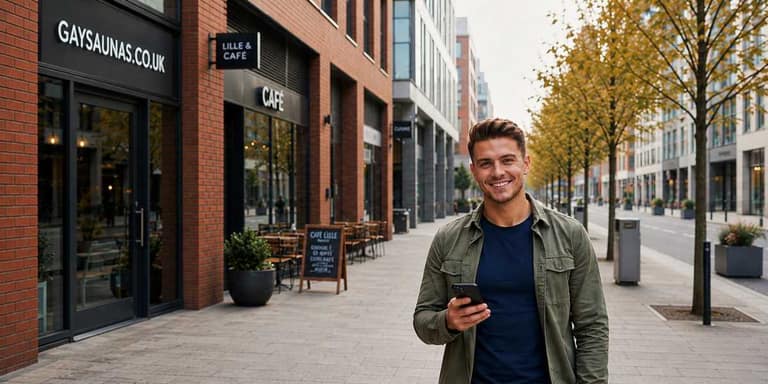
Find Gay Saunas Across the UK
Find nearby venues to easily compare opening times, entry prices and facilities. Results are automatically sorted by distance.
Last verified on 29 | 09 | 2026Location data is never stored.
No location selected yet.
Updated Hourly
Most Viewed
See which saunas are attracting the most attention right now.
The Sauna Reports
First visit guides
New to saunas? Start here.

How to Prepare for Your First Gay Sauna Visit | UK Guide
Why read it: Everything to sort before your first gay sauna visit: sexual health, what to pack, body confidence, timing, and nerves. Plain-spoken UK answers.

Who Can Go to a Gay Sauna?
Why read it: Gay saunas welcome all men — gay, bi, curious, or questioning. UK guide covering trans inclusion, disability access, body image, HIV, and what to expect.

Arriving at a Gay Sauna: What Happens in the First 15 Minutes
Why read it: Step-by-step guide to your first 15 minutes at a UK gay sauna — from buzzer to locker to towel. Know exactly what happens at check-in.

Gay Sauna Facilities Explained: What Every Room Is For | UK Guide
Why read it: What every room in a UK gay sauna is for — from steam rooms and jacuzzis to dark rooms, glory holes, and sling rooms. Full facility guide series.

Gay Sauna Etiquette and Consent
Why read it: Master UK gay sauna etiquette and consent culture—from non-verbal signals to handling rejection. The unwritten rules that make shared intimate space work.

Health & Safety at Gay Saunas: The 2026 UK Guide
Why read it: PrEP, doxyPEP, vaccines, testing, consent, heat safety and chemsex — the complete UK health and safety guide for gay sauna visitors. Updated March 2026.
The basics
What Is a Gay Sauna?
A gay sauna - also called a men's sauna, male sauna, or gay bathhouse - is a private venue for men who have sex with men. Every UK gay sauna includes wet facilities like steam rooms, dry saunas, and showers.
These venues are open to gay, bisexual, bi-curious, and questioning men. You don't need to identify as anything to visit.
Good to know
Common Questions
Do you have to be gay?
No. UK gay saunas welcome men of all sexual orientations - gay, bisexual, bi-curious, and questioning. No venue asks you to identify or explain yourself.
Can you go on your own?
Yes - most people do. Venues are designed for solo attendance: single-occupancy lockers, individual towels, no plus-one required.
Do you have to have sex?
No. Sexual activity is available but never expected, required, or assumed. Many visitors use only the wet facilities - steam rooms, saunas, jacuzzis.
What do you need to bring?
Photo ID and a way to pay. Most venues provide a towel, locker, and basic toiletries with your entry fee. You're in control the entire time.
Browse venues
Directory
Primary
Home & Search
The UK’s gay sauna directory and guide. Verified opening times, prices and reviews for every venue, plus clear guides on etiquette, consent and sexual health.
Primary
Find a sauna
Find the nearest gay sauna to your location right now. Our live UK locator covers the whole of the UK — see opening hours, entry prices and facilities.
Directory
Every gay sauna in the UK
The most comprehensive directory of gay saunas across England, Scotland, Wales, and Northern Ireland. Current prices, opening hours, facilities…
Guides
All Sauna Guides
New to the scene? Our comprehensive gay sauna guides cover everything from what to pack and locker room etiquette to consent, safety, and overcoming nerves.
More
Sauna FAQs
Clear beginner answers about what gay saunas are, what to bring, consent, boundaries, hygiene, safer sex and first-time nerves.
More
About us
Gaysaunas.co.uk is the UK’s free, private gay sauna directory — verified prices, reviews, a live locator, and beginner guides. No sign-up needed.
More
Events
Browse UK gay sauna event brands and organisers in one place, with direct links to their own websites for current dates, tickets and details.
More
Add/Update a Sauna
Get in touch with GaySaunas.co.uk for venue listing updates, event organiser enquiries, advertising and editorial feedback. UK-based directory.
Homepage linked
Privacy
This Privacy Policy describes how GaySaunas.co.uk (“we”, “us”, or “our”) collects, uses, and shares your personal information when you visit our website.
Homepage linked
Terms
This Terms & Conditions agreement is designed for a directory and review site like GaySaunas.co.uk. It clarifies that you provide information only and are not responsible for the actual operation of the venues listed.
Guides
Advanced Sauna Advice
Beyond the basics: honest UK advice on sauna costs, body confidence, disability access, trans inclusion, couples, and knowing when your pattern needs a reset.
Guides
After Your Visit
Your after-visit checklist: PEP timelines, STI testing windows, emotional aftercare, and UK support. A practical guide from people who know.
Guides
Arriving at a Gay Sauna
Step-by-step guide to your first 15 minutes at a UK gay sauna — from buzzer to locker to towel. Know exactly what happens at check-in.
Guides
Etiquette and Consent
Master UK gay sauna etiquette and consent culture—from non-verbal signals to handling rejection. The unwritten rules that make shared intimate space work.
Guides
Gay Sauna Facilities
What every room in a UK gay sauna is for — from steam rooms and jacuzzis to dark rooms, glory holes, and sling rooms. Full facility guide series.
Guides
Going Alone or With a Friend
Most gay sauna visitors go alone. Find out how to decide between solo and with a friend, what each option actually involves, and how to prepare.
Guides
Health and Safety
PrEP, doxyPEP, vaccines, testing, consent, heat safety and chemsex — the complete UK health and safety guide for gay sauna visitors. Updated March 2026.
Guides
History of Gay Saunas
UK gay saunas were built under threat of prosecution and survived the AIDS crisis. How they got here — and why they still matter.
Guides
Who’s Welcome at Gay Saunas
Gay saunas welcome all men — gay, bi, curious, or questioning. UK guide covering trans inclusion, disability access, body image, HIV, and what to expect.
Guides
Preparing for Your First Visit
Everything to sort before your first gay sauna visit: sexual health, what to pack, body confidence, timing, and nerves. Plain-spoken UK answers.
Guides
Sexual Health Resources
Verified UK sexual health services, crisis helplines, PrEP access, and LGBT+ support for gay and bisexual men. Free NHS clinics, testing, and vaccinations.
Homepage linked
England 34 venues
From multi-floor complexes in London and Manchester to well-established local favourites in Birmingham, Leeds, Brighton, and beyond. Every venue listed with…
Homepage linked
Birmingham
Two Birmingham listings: Yumbo at Hockley Hill and Spartan Health Club in Erdington. Just For You’s former Summer Hill Road venue is closed.
Homepage linked
Blackpool
Two venues in Blackpool town centre. Acqua Sauna and W3 Sauna, both verified with current prices, hours, and facilities.
Regions
East Midlands
Explore the best gay saunas in the East Midlands for 2026. Get up-to-date entry prices, opening hours, and venue reviews for Nottingham, Leicester, Derby…
Homepage linked
Leeds
Find your nearest Leeds gay sauna instantly—complete listings, snapshot reviews & over 100 expert guides for safer, steamy fun at GaySaunas.co.
Regions
London
Six venues across Soho, Covent Garden, Waterloo, Kennington and East London. Every listing verified with current prices, hours…
Regions
North East
Two venues serving the North East region: Number 52 Sauna in Newcastle and Greenhouse Sauna in Luton. Every listing verified with current prices, hours…
Regions
North West
Eight venues across Manchester, Blackpool, Merseyside, Bury, Shaw, Northwich and Carlisle. Every listing verified with current prices, hours, and facilities.
Regions
South East
Explore the best gay saunas in South East England with our 2026 guide. Find latest entry prices, opening hours, and reviews for venues in Brighton, Hove…
Regions
South West
Four gay saunas across Plymouth, Bournemouth, Torquay and Swindon, plus Redruth’s Monday social and play club in Cornwall. Redruth has no sauna or hot tub.
Yorkshire & Humberside
South Yorkshire
ClubZeus Sheffield is open at 208 Savile Street East. Current opening hours, membership, prices and facilities, with the former Boiler Room listing preserved.
M–S
Sheffield
The Boiler Room Sheffield has closed. Its premises reopened as ClubZeus Sheffield under new owners on 21 August 2026. Find the new venue listing.
Regions
West Midlands
Four venues across Birmingham, Stourbridge and Darlaston, including Yumbo at Hockley Hill. The former Just For You premises are closed.
Yorkshire & Humberside
West Yorkshire
West Yorkshire venue listings and visitor information. Steam Complex is temporarily closed pending relocation; see current open alternatives.
Homepage linked
Northern Ireland 1 venue
Explore the premier gay sauna in Northern Ireland for 2026. Get the latest entry prices, opening hours, and venue details for Outside Sauna in Belfast.
Yorkshire & Humberside
Scotland
Explore the top gay saunas in Scotland for 2026. Get up-to-date entry prices, opening hours, and venue reviews for Glasgow’s Pipeworks and Edinburgh’s…
Yorkshire & Humberside
Wales
Greenhouse Sauna in Newport is Wales’ only dedicated gay sauna. Full listing with current prices, opening hours, and facilities verified for 2026.
Blackpool
Acqua Sauna Blackpool
Verified on 2 Aug 2026. Latest prices, opening times, events, facilities and reviews.
Manchester
Basement Complex Manchester
Verified on 4 Sep 2026. Opening times, non-age-based prices and events checked.
Mansfield
Club Zeus Sauna Mansfield
Verified on 2 Aug 2026. Latest prices, opening times, events, facilities and reviews.
London
Covent Garden Health Spa London
Verified on 2 Aug 2026. Latest prices, opening times, events, facilities and reviews.
New Brighton
Dolphin Sauna Merseyside
Verified on 2 Aug 2026. Latest prices, opening times, events, facilities and reviews.
London
E15 Club London
Verified on 2 Aug 2026. Latest prices, opening times, events, facilities and reviews.
Hull
Gentry Spa Hull
Verified on 2 Aug 2026. Latest prices, opening times, events, facilities and reviews.
Newport
Greenhouse Gay Sauna Newport
Verified on 4 Sep 2026. Opening times, non-age-based prices and events checked.
Luton
Greenhouse Sauna Luton
Verified on 4 Sep 2026. Opening times, non-age-based prices and events checked.
Stourbridge
Heroes Sauna Stourbridge
Verified on 29 Sep 2026. Opening times, non-age-based prices and events checked.
Birmingham
Just For You Birmingham (Closed)
Verified on 8 Sep 2026. Permanently closed; this page is retained for venue history and current alternatives.
2 Union Street
Manticore Spa Plymouth
Verified on 2 Aug 2026. Latest prices, opening times, events, facilities and reviews.
Medway
ME1 Sauna Rochester
Verified on 2 Aug 2026. Latest prices, opening times, events, facilities and reviews.
Bury
Neros Sauna Bury
Verified on 2 Aug 2026. Latest prices, opening times, events, facilities and reviews.
Newcastle
Number 52 Sauna Newcastle
Verified on 2 Aug 2026. Latest prices, opening times, events, facilities and reviews.
Belfast
Outside Sauna Belfast
Verified on 2 Jul 2026. Latest prices, opening times, events, facilities and reviews.
Shaw
Pennine Sauna
Verified on 2 Jul 2026. Latest prices, opening times, events, facilities and reviews.
Leeds
Pipeworks Leeds
Verified on 10 Sep 2026. Opening times, non-age-based prices and events checked.
Eastborough
Plastic Ivy Sauna Dewsbury
Verified on 29 Sep 2026. Opening times, non-age-based prices and events checked.
London
Pleasuredrome Gay Sauna London
Verified on 29 Sep 2026. Opening times, non-age-based prices and events checked.
London
Sailors Sauna London
Verified on 8 Sep 2026. Opening times, non-age-based prices and events checked.
Northwich
Sauna Sauna Northwich
Verified on 2 Aug 2026. Latest prices, opening times, events, facilities and reviews.
Bournemouth
SaunaBar Bournemouth
Verified on 2 Aug 2026. Latest prices, opening times, events, facilities and reviews.
Birmingham
Spartan Club Birmingham
Verified on 2 Jul 2026. Latest prices, opening times, events, facilities and reviews.
Leicester
Splash Spa Leicester
Verified on 2 Aug 2026. Latest prices, opening times, events, facilities and reviews.
Rock Road
Steamer Quay Sauna Torquay
Verified on 4 Sep 2026. Opening times, non-age-based prices and events checked.
Edinburgh
Steamworks Gay Sauna Edinburgh
Verified on 18 Jul 2026. Latest prices, opening times, events, facilities and reviews.
Nelson Street
Sweat Sauna Carlisle
Verified on 29 Sep 2026. Opening times, non-age-based prices and events checked.
London
Sweatbox Soho London
Verified on 29 Sep 2026. Opening times, non-age-based prices and events checked.
Hove
The Boiler Room Sauna Brighton
Verified on 29 Sep 2026. Opening times, non-age-based prices and events checked.
Brighton
The Brighton Sauna
Verified on 29 Sep 2026. Opening times, non-age-based prices and events checked.
Darlaston
The Greenhouse Sauna Darlaston
Verified on 2 Aug 2026. Latest prices, opening times, events, facilities and reviews.
London
The Locker Room Gay Sauna London
Verified on 2 Aug 2026. Latest prices, opening times, events, facilities and reviews.
Glasgow
The Pipeworks Glasgow
Verified on 2 Aug 2026. Latest prices, opening times, events, facilities and reviews.
9 Henry St
Touch Sauna Swindon
Verified on 4 Sep 2026. Opening times, non-age-based prices and events checked.
Portsmouth
Tropics Day Spa, Portsmouth
Verified on 2 Aug 2026. Latest prices, opening times, events, facilities and reviews.
Blackpool
W3 Sauna Blackpool
Verified on 2 Aug 2026. Latest prices, opening times, events, facilities and reviews.
Sheffield
ClubZeus Sheffield
Verified on 7 Sep 2026. Latest prices, opening times, events, facilities and reviews.
Huddersfield
Empire Cinema Club Huddersfield
Verified on 4 Sep 2026. Opening times, non-age-based prices and events checked.
Redruth
Redruth — Social & Play Club (former sauna)
Verified on 8 Sep 2026. Latest prices, opening times, events, facilities and reviews.
Birmingham
Yumbo Birmingham
Verified on 8 Sep 2026. Opening times, non-age-based prices and events checked.
Guides
Arriving at a Gay Sauna: What Happens in the First 15 Minutes
Step-by-step guide to your first 15 minutes at a UK gay sauna — from buzzer to locker to towel. Know exactly what happens at check-in.
Guides
Gay Sauna Etiquette and Consent
Master UK gay sauna etiquette and consent culture—from non-verbal signals to handling rejection. The unwritten rules that make shared intimate space work.
Guides
Cruising Mazes in Gay Saunas: What to Expect (UK Guide)
What a cruising maze is, how they work, unwritten rules, and which UK gay saunas have them. A practical guide for first-timers and regulars.
Guides
Dark Rooms in Gay Saunas: What to Expect (UK Guide)
What a dark room is, how consent works in the dark, unwritten rules, and which UK gay saunas have them. A practical guide for first-timers and regulars.
Guides
Dungeons in Gay Saunas: UK Guide to Kink & Fetish Rooms
What a dungeon in a UK gay sauna is, what equipment to expect, how play starts, the unwritten rules, and which venues have dungeon facilities.
Guides
Glory Holes in Gay Saunas — What They Are & How They Work
What glory holes are, why men use them, what to expect, and the unwritten rules. A practical guide to glory hole etiquette in UK gay saunas.
Guides
Glory Holes in Gay Saunas: Safe Etiquette Guide
Navigate glory holes in gay saunas safely with tips on consent, signalling, and hygiene—perfect for UK men seeking discreet, respectful anonymous play in…
Guides
Jacuzzis in Gay Saunas — What to Expect and How They Work
What the jacuzzi is for in a UK gay sauna, unwritten rules, what’s OK in the water, and which venues stand out. Practical guide for all visitors.
Guides
Private Cabins in Gay Saunas: What to Expect (UK Guide)
What private cabins in UK gay saunas are, how they work, door signals, and which venues offer them. A practical guide for all experience levels.
Guides
Sling Rooms in Gay Saunas: What to Expect (UK Guide)
What a sling room is, how consent works, unwritten rules, and which UK gay saunas have them. A practical guide for first-timers and regulars…
Guides
Steam Rooms in Gay Saunas: What to Expect (UK Guide)
What the steam room in a UK gay sauna is actually like — how it works, what happens, cruising signals, and which venues have one.
Guides
Gay sauna facilities explained
What every room in a UK gay sauna is for — from steam rooms and jacuzzis to dark rooms, glory holes, and sling rooms. Full facility guide series.
Guides
Going alone or with a friend?
Most gay sauna visitors go alone. Find out how to decide between solo and with a friend, what each option actually involves, and how to prepare.
Guides
Gay sauna facilities explained
What every room in a UK gay sauna is for — from steam rooms and jacuzzis to dark rooms, glory holes, and sling rooms. Full facility guide series.
Guides
How to Prepare for Your First Gay Sauna Visit
Everything to sort before your first gay sauna visit: sexual health, what to pack, body confidence, timing, and nerves. Plain-spoken UK answers.
Guides
UK Sexual Health & Support Resources for Gay & Bi Men
Verified UK sexual health services, crisis helplines, PrEP access, and LGBT+ support for gay and bisexual men. Free NHS clinics, testing, and vaccinations.
Guides
What to Do After Your Visit
Your after-visit checklist: PEP timelines, STI testing windows, emotional aftercare, and UK support. A practical guide from people who know.
Guide
Dungeons in Gay Saunas: UK Guide to Kink & Fetish Rooms
What a dungeon in a UK gay sauna is, what equipment to expect, how play starts, the unwritten rules, and which venues have dungeon facilities.
In brief
- A dungeon in a UK gay sauna is a dedicated kink and fetish play area, typically fitted with equipment like a sling, bondage cross, or bench, designed for rougher, more structured, or more equipment-based play than you’ll find in the rest of the venue. Entering one doesn’t commit you to anything you haven’t agreed to.
- Dungeons are not the same as dark rooms or sling rooms, though they share some DNA. The difference is the range of equipment, the type of play the room is designed for, and the fact that dungeon etiquette leans on kink-scene conventions — boundary-setting, safewords, verbal check-ins — rather than the non-verbal cruising system that governs most of the venue.
- Not every UK gay sauna has a dungeon, and not every room labelled “dungeon” is the same thing. Some are purpose-built fetish play rooms with multiple pieces of fixed equipment. Others are smaller areas with a sling and a cross that the venue brands as a dungeon.
- You do not need to be into heavy BDSM, own fetish gear, or identify as part of the kink scene to walk into a dungeon. Watching is legitimate. Curiosity is legitimate. Leaving after thirty seconds is legitimate. The room is there for anyone who wants to use it — on their own terms.
- Who is it for? Any man (cis or trans) or non-binary person comfortable in a masculine space. You do not need to identify as ‘gay’ to visit; these venues are more accurately described as being for men who have sex with men (MSM).
01 What a Dungeon Is — and What It Isn’t
A dungeon in a UK gay sauna is a room or enclosed area set up specifically for kink and fetish play. It’s usually positioned within the venue’s play floor — on the same level as dark rooms, sling rooms, and private cabins — but set apart by its equipment, its lighting, and what it’s built for.
Where a dark room strips everything back to touch and anonymity, and a sling room centres on one piece of equipment in a semi-public setting, a dungeon is designed to support a wider range of activities. Think restraint, impact play, bondage, sensory play, and dom/sub dynamics — the kind of things that need fixed equipment, anchor points, and enough room to use them.
The term “dungeon” in a sauna listing doesn’t mean a commercial BDSM dungeon like you’d hire for a private session. It means a self-service play area where the equipment is provided and the men using it set the pace themselves. There’s no dungeon master running scenes, no formal booking, and no requirement to know what you’re doing before you walk in.
Understanding the basics covered in this guide will make it a much better experience.
Dedicated dungeon and fetish-play areas are documented in UK gay saunas by the mid-2000s, likely reflecting overlap with the long-established UK leather and fetish scene. London’s Backstreet leather bar opened in 1985 as a strict men-only leather and rubber venue, and fetish nights expanded through the internet era. As UK saunas grew more confident in their offerings through the 2010s, dedicated kink rooms became a more visible part of the facility mix — moving from something you’d only find at a fetish club to something available on an ordinary Tuesday afternoon.
02 How a Dungeon Differs from a Dark Room or Sling Room
If you’ve already read our guides to dark rooms and sling rooms, the easiest way to understand a dungeon is to compare it with both. The differences come down to lighting, equipment, and the type of interaction each room is built for.
Dark rooms are defined by the absence of light. Anonymity is the point, touch replaces sight, and encounters are often brief and spontaneous. Consent operates almost entirely through non-verbal signals — touch, reciprocation, withdrawal.
A dungeon is lit. Not brightly, but enough to see faces, bodies, and what’s happening with the equipment. That visibility changes the dynamic entirely.
Sling rooms centre on one piece of equipment — the sling — and the power dynamic that comes from one person being physically suspended while others are standing. A dungeon may contain a sling, but it also offers additional equipment: a bondage cross, a bench, restraints, sometimes cages or hoists. The range of equipment means the range of possible activity is wider, and the interactions tend to be more deliberate and more explicitly negotiated.
The consent model is different too. Dark rooms default to the non-verbal cruising system used throughout the venue. Sling rooms require more verbal checking-in because the person in the sling has restricted movement.
Dungeons go a step further — the available guidance for kink and fetish play in UK saunas emphasises discussing limits, establishing a simple safeword, and confirming consent rather than assuming it. It’s less formally structured than a dedicated BDSM club night, but more explicit than what you’d find in a dark room or standing encounter.
The overlap between these areas is real. Some venues have a sling inside their dungeon. Some have a dark area within the dungeon.
The labels aren’t always clean-cut, and some saunas brand a sling in a corridor as a “dungeon area.” What matters more than the name is the equipment available and the expectations that go with it.
03 What Equipment You’ll Typically Find
Not every dungeon is the same, but most share a core set of equipment. Knowing what each piece is for removes the uncertainty of walking in and staring at something you don’t recognise.
Slings are the most common piece of dungeon equipment in UK saunas. Suspended from a ceiling-mounted frame by chains, with stirrups for the legs, the sling holds the user in a reclined, open position. Our sling rooms guide covers these in full — in a dungeon context, the sling is one tool among several rather than the room’s sole focus.
St Andrew’s crosses (also called bondage crosses or X-frames) appear in multiple UK gay sauna dungeon listings. These are large X-shaped frames, usually wall-mounted or freestanding, with attachment points at the ends of each arm for wrist and ankle restraints. The user stands facing the cross (or facing outward, depending on the dynamic) and is restrained in a spread position.
Bondage benches (or spanking benches) are padded, waist-height structures the user kneels on or bends over. They position the body for impact play — paddling, flogging, spanking — while keeping the user stable and supported. Some have built-in restraint points for wrists and ankles.
Restraints and anchor points are often fixed to walls, ceilings, or equipment. These include D-rings, carabiners, chains, and sometimes pre-attached cuffs. They’re there for men who want to incorporate bondage into their play without bringing their own gear.
Cages appear in some larger dungeons. These are lockable enclosures, typically metal, designed for containment play. Not every venue has one, and they’re more common in saunas that run dedicated fetish events.
The specific combination varies by venue. Some dungeons have a sling, a cross, and a bench. Others have a sling and restraint points only. What’s consistent is that the equipment is fixed, commercial-grade, and maintained by the venue — you don’t need to bring anything to use the room.
04 How Dungeon Play Usually Starts
The dungeon sits somewhere between the drift-in culture of a dark room and the negotiated scenes of a dedicated BDSM club. Where it lands on that spectrum depends on the venue, the night, and who’s in the room.
On a quiet midweek session, the dungeon might be empty for long stretches. A man might walk in, try the sling, explore the equipment alone, or simply look around and leave. There’s no performance expectation — the room doesn’t require an audience or a partner, and light play or solo exploration is just as valid a use as a full scene.
When there are other men in the room, interactions typically start the same way they do elsewhere in the venue: eye contact, proximity, body language. The difference is what happens after the initial signal. In a dark room, touch follows quickly and non-verbally.
In a dungeon, the available guidance from UK venues and kink communities emphasises a brief but explicit check-in — even if it’s as simple as “what are you into?” or “is this OK?” That doesn’t mean a formal negotiation with lists and contracts. It means acknowledging that the equipment changes what’s possible, and making sure both people are on the same page before one of them is restrained or bent over a bench.
Reading the room matters. A man standing near a cross, watching, is signalling interest but hasn’t committed to anything. A man already restrained on a cross is mid-scene — approach only if you receive a clear invitation from him or his partner.
A man lying in a sling making eye contact is different from a man lying in a sling with someone already between his legs. Context tells you everything.
During fetish events or themed nights, the dungeon takes on a more structured feel. Dress codes may apply (leather, rubber, fetish gear), the equipment sees heavier use, and the men in the room are more likely to have specific experience and expectations. These nights are often the best time to try dungeon play if you want a more guided, kink-literate atmosphere.
05 The Unwritten Rules
Every sexual area in a sauna has its conventions, but the dungeon’s are sharper — because the equipment raises the stakes and the power dynamics are more visible.
Consent is more explicit here
The kink-scene norms that govern dungeon play put more weight on verbal communication than the rest of the venue. Discussing limits, using a simple safeword (even just “stop” or “pause”), and checking in during play are standard practice. The non-verbal cruising system still operates for initial signals, but once equipment is involved — especially anything that restricts movement — the expectation shifts toward explicit agreement.
Don’t touch equipment someone else is using
If a man is on a cross, in a sling, or bent over a bench, that equipment is occupied. You don’t adjust their restraints, touch the equipment, or insert yourself into a scene without a clear, unambiguous invitation from the person involved — or from their partner, if they’re playing with someone.
Watching is welcome, crowding is not
Standing back and watching a scene in progress is normal and accepted. Hovering a foot away, pressing closer to get a better view, or standing so near that your presence becomes pressure is not. If the room is small and a scene is happening, one or two watchers at a respectful distance is fine.
If someone says stop, it stops
This applies everywhere in the venue, but it carries particular weight in a dungeon where someone may be physically restrained and unable to simply walk away. If someone uses a safeword, says stop, or signals discomfort — even non-verbally, by tensing, pulling away, or going quiet — everything stops immediately. No negotiation, no “just one more minute.”
Clean the equipment when you’re done
Dungeons contain shared equipment. Wipe down slings, benches, and any surface you’ve used with the cleaning supplies the venue provides. Most saunas stock antibacterial wipes or spray near play areas.
Don’t interfere with someone else’s scene
Two men engaged in a scene — one restrained, the other flogging or otherwise engaged — are in their own interaction. Walking up and touching either of them, trying to “join in,” or commenting on what they’re doing is unwelcome unless you’ve been explicitly invited. Interrupting a scene in progress is one of the fastest ways to get pulled aside by staff.
Staff will act on red flags
Venue staff know what a dungeon is for and are not going to interrupt consensual play. What they will intervene on: ignoring clear “stop” signals, roughness that’s obviously not consensual, crowding someone who’s trying to leave, or interfering with another person’s scene. If you see something that doesn’t look right, telling a member of staff is always appropriate.
06 Bringing Your Own Gear
Some men arrive at the dungeon with a bag. Most don’t. What you can bring depends on the venue, and policies vary — so if you plan to use your own equipment, check with reception when you arrive.
Common items men bring include floggers, paddles, hoods, blindfolds, rope, and personal restraints. Most venues are fine with personal toys and impact implements as long as they’re clean and used consensually. Items that could cause injury or that the venue considers a liability — anything involving sharp edges, electrical play equipment, or substances — are more likely to be restricted.
What you won’t need to bring: the fixed equipment. Slings, crosses, benches, and anchor points are provided by the venue. That’s the point of having a dungeon — the infrastructure is there so you don’t need to build your own.
On dress code: most men use the dungeon in whatever they’re wearing in the rest of the venue — typically a towel, or nothing. During regular sessions, there’s no expectation of leather, rubber, or fetish gear.
During dedicated fetish nights, a dress code may apply, and the men in the room are more likely to be in gear. Neither is the “correct” way to use the dungeon — both are normal.
07 UK Venues with Dungeon Facilities
Not every UK gay sauna has a dungeon, and the ones that do vary in scale and setup. Here are the venues where dungeon or fetish-play facilities are currently confirmed.
Nero’s Sauna in Bury includes a permanent dungeon as part of its standard facilities, described as a “fully equipped dungeon” with specialist gear and privacy features. The dungeon is available during normal sessions. On top of regular access, external fetish organisers like Kage Club run monthly BDSM events at Nero’s, during which the dungeon and play areas see more structured, event-style use with a kink-specific crowd and dress code.
Steam Complex in Leeds has a dedicated dungeon room described as “fully equipped” and offering a dedicated play area for kink-minded visitors. It’s open as part of the standard facilities, not limited to themed nights.
Splash Spa in Leicester has a dungeon room on its first floor equipped with a sling and bondage cross, alongside private cabins, a darkroom maze, cinema room, and multiple glory holes.
Sweatbox Soho in London has a fetish room and leather swing area on its lowest play floor. The venue doesn’t label it as a “dungeon,” but it functions as a kink-focused area within the broader play layout, with sling areas and cubicles across multiple floors.
Some venues have kink-friendly play areas without a branded dungeon. Gentry Spa in Hull has darkroom and play areas including a dedicated sling room, and runs a regular fetish night. Club Zeus in Mansfield has play areas and hosts sex-focused events, though no dedicated dungeon room is currently confirmed.
Venue layouts and facilities can change. Check individual listing pages on our UK directory for current details before travelling.
Media library
Media


Saved
Your saved items are kept on this device.
Save venues, guides and pages to build your shortlist.
More
Site tools
Static directory site · gaysaunas.co.uk
More page links