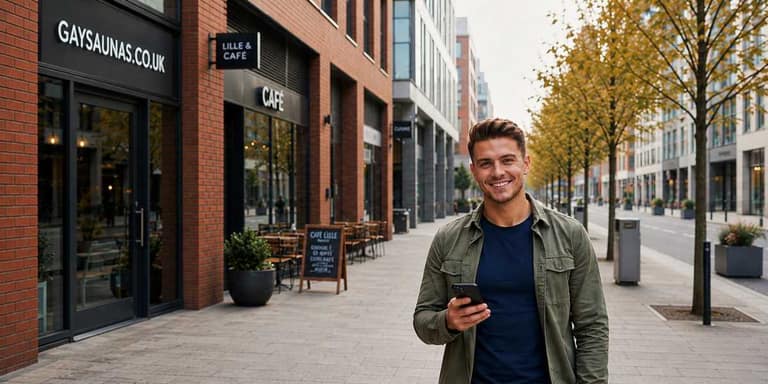
Find Gay Saunas Across the UK
Find nearby venues to easily compare opening times, entry prices and facilities. Results are automatically sorted by distance.
Last verified on 29 | 09 | 2026Location data is never stored.
No location selected yet.
Updated Hourly
Most Viewed
See which saunas are attracting the most attention right now.
The Sauna Reports
First visit guides
New to saunas? Start here.

How to Prepare for Your First Gay Sauna Visit | UK Guide
Why read it: Everything to sort before your first gay sauna visit: sexual health, what to pack, body confidence, timing, and nerves. Plain-spoken UK answers.

Who Can Go to a Gay Sauna?
Why read it: Gay saunas welcome all men — gay, bi, curious, or questioning. UK guide covering trans inclusion, disability access, body image, HIV, and what to expect.

Arriving at a Gay Sauna: What Happens in the First 15 Minutes
Why read it: Step-by-step guide to your first 15 minutes at a UK gay sauna — from buzzer to locker to towel. Know exactly what happens at check-in.

Gay Sauna Facilities Explained: What Every Room Is For | UK Guide
Why read it: What every room in a UK gay sauna is for — from steam rooms and jacuzzis to dark rooms, glory holes, and sling rooms. Full facility guide series.

Gay Sauna Etiquette and Consent
Why read it: Master UK gay sauna etiquette and consent culture—from non-verbal signals to handling rejection. The unwritten rules that make shared intimate space work.

Health & Safety at Gay Saunas: The 2026 UK Guide
Why read it: PrEP, doxyPEP, vaccines, testing, consent, heat safety and chemsex — the complete UK health and safety guide for gay sauna visitors. Updated March 2026.
The basics
What Is a Gay Sauna?
A gay sauna - also called a men's sauna, male sauna, or gay bathhouse - is a private venue for men who have sex with men. Every UK gay sauna includes wet facilities like steam rooms, dry saunas, and showers.
These venues are open to gay, bisexual, bi-curious, and questioning men. You don't need to identify as anything to visit.
Good to know
Common Questions
Do you have to be gay?
No. UK gay saunas welcome men of all sexual orientations - gay, bisexual, bi-curious, and questioning. No venue asks you to identify or explain yourself.
Can you go on your own?
Yes - most people do. Venues are designed for solo attendance: single-occupancy lockers, individual towels, no plus-one required.
Do you have to have sex?
No. Sexual activity is available but never expected, required, or assumed. Many visitors use only the wet facilities - steam rooms, saunas, jacuzzis.
What do you need to bring?
Photo ID and a way to pay. Most venues provide a towel, locker, and basic toiletries with your entry fee. You're in control the entire time.
Browse venues
Directory
Primary
Home & Search
The UK’s gay sauna directory and guide. Verified opening times, prices and reviews for every venue, plus clear guides on etiquette, consent and sexual health.
Primary
Find a sauna
Find the nearest gay sauna to your location right now. Our live UK locator covers the whole of the UK — see opening hours, entry prices and facilities.
Directory
Every gay sauna in the UK
The most comprehensive directory of gay saunas across England, Scotland, Wales, and Northern Ireland. Current prices, opening hours, facilities…
Guides
All Sauna Guides
New to the scene? Our comprehensive gay sauna guides cover everything from what to pack and locker room etiquette to consent, safety, and overcoming nerves.
More
Sauna FAQs
Clear beginner answers about what gay saunas are, what to bring, consent, boundaries, hygiene, safer sex and first-time nerves.
More
About us
Gaysaunas.co.uk is the UK’s free, private gay sauna directory — verified prices, reviews, a live locator, and beginner guides. No sign-up needed.
More
Events
Browse UK gay sauna event brands and organisers in one place, with direct links to their own websites for current dates, tickets and details.
More
Add/Update a Sauna
Get in touch with GaySaunas.co.uk for venue listing updates, event organiser enquiries, advertising and editorial feedback. UK-based directory.
Homepage linked
Privacy
This Privacy Policy describes how GaySaunas.co.uk (“we”, “us”, or “our”) collects, uses, and shares your personal information when you visit our website.
Homepage linked
Terms
This Terms & Conditions agreement is designed for a directory and review site like GaySaunas.co.uk. It clarifies that you provide information only and are not responsible for the actual operation of the venues listed.
Guides
Advanced Sauna Advice
Beyond the basics: honest UK advice on sauna costs, body confidence, disability access, trans inclusion, couples, and knowing when your pattern needs a reset.
Guides
After Your Visit
Your after-visit checklist: PEP timelines, STI testing windows, emotional aftercare, and UK support. A practical guide from people who know.
Guides
Arriving at a Gay Sauna
Step-by-step guide to your first 15 minutes at a UK gay sauna — from buzzer to locker to towel. Know exactly what happens at check-in.
Guides
Etiquette and Consent
Master UK gay sauna etiquette and consent culture—from non-verbal signals to handling rejection. The unwritten rules that make shared intimate space work.
Guides
Gay Sauna Facilities
What every room in a UK gay sauna is for — from steam rooms and jacuzzis to dark rooms, glory holes, and sling rooms. Full facility guide series.
Guides
Going Alone or With a Friend
Most gay sauna visitors go alone. Find out how to decide between solo and with a friend, what each option actually involves, and how to prepare.
Guides
Health and Safety
PrEP, doxyPEP, vaccines, testing, consent, heat safety and chemsex — the complete UK health and safety guide for gay sauna visitors. Updated March 2026.
Guides
History of Gay Saunas
UK gay saunas were built under threat of prosecution and survived the AIDS crisis. How they got here — and why they still matter.
Guides
Who’s Welcome at Gay Saunas
Gay saunas welcome all men — gay, bi, curious, or questioning. UK guide covering trans inclusion, disability access, body image, HIV, and what to expect.
Guides
Preparing for Your First Visit
Everything to sort before your first gay sauna visit: sexual health, what to pack, body confidence, timing, and nerves. Plain-spoken UK answers.
Guides
Sexual Health Resources
Verified UK sexual health services, crisis helplines, PrEP access, and LGBT+ support for gay and bisexual men. Free NHS clinics, testing, and vaccinations.
Homepage linked
England 34 venues
From multi-floor complexes in London and Manchester to well-established local favourites in Birmingham, Leeds, Brighton, and beyond. Every venue listed with…
Homepage linked
Birmingham
Two Birmingham listings: Yumbo at Hockley Hill and Spartan Health Club in Erdington. Just For You’s former Summer Hill Road venue is closed.
Homepage linked
Blackpool
Two venues in Blackpool town centre. Acqua Sauna and W3 Sauna, both verified with current prices, hours, and facilities.
Regions
East Midlands
Explore the best gay saunas in the East Midlands for 2026. Get up-to-date entry prices, opening hours, and venue reviews for Nottingham, Leicester, Derby…
Homepage linked
Leeds
Find your nearest Leeds gay sauna instantly—complete listings, snapshot reviews & over 100 expert guides for safer, steamy fun at GaySaunas.co.
Regions
London
Six venues across Soho, Covent Garden, Waterloo, Kennington and East London. Every listing verified with current prices, hours…
Regions
North East
Two venues serving the North East region: Number 52 Sauna in Newcastle and Greenhouse Sauna in Luton. Every listing verified with current prices, hours…
Regions
North West
Eight venues across Manchester, Blackpool, Merseyside, Bury, Shaw, Northwich and Carlisle. Every listing verified with current prices, hours, and facilities.
Regions
South East
Explore the best gay saunas in South East England with our 2026 guide. Find latest entry prices, opening hours, and reviews for venues in Brighton, Hove…
Regions
South West
Four gay saunas across Plymouth, Bournemouth, Torquay and Swindon, plus Redruth’s Monday social and play club in Cornwall. Redruth has no sauna or hot tub.
Yorkshire & Humberside
South Yorkshire
ClubZeus Sheffield is open at 208 Savile Street East. Current opening hours, membership, prices and facilities, with the former Boiler Room listing preserved.
M–S
Sheffield
The Boiler Room Sheffield has closed. Its premises reopened as ClubZeus Sheffield under new owners on 21 August 2026. Find the new venue listing.
Regions
West Midlands
Four venues across Birmingham, Stourbridge and Darlaston, including Yumbo at Hockley Hill. The former Just For You premises are closed.
Yorkshire & Humberside
West Yorkshire
West Yorkshire venue listings and visitor information. Steam Complex is temporarily closed pending relocation; see current open alternatives.
Homepage linked
Northern Ireland 1 venue
Explore the premier gay sauna in Northern Ireland for 2026. Get the latest entry prices, opening hours, and venue details for Outside Sauna in Belfast.
Yorkshire & Humberside
Scotland
Explore the top gay saunas in Scotland for 2026. Get up-to-date entry prices, opening hours, and venue reviews for Glasgow’s Pipeworks and Edinburgh’s…
Yorkshire & Humberside
Wales
Greenhouse Sauna in Newport is Wales’ only dedicated gay sauna. Full listing with current prices, opening hours, and facilities verified for 2026.
Blackpool
Acqua Sauna Blackpool
Verified on 2 Aug 2026. Latest prices, opening times, events, facilities and reviews.
Manchester
Basement Complex Manchester
Verified on 4 Sep 2026. Opening times, non-age-based prices and events checked.
Mansfield
Club Zeus Sauna Mansfield
Verified on 2 Aug 2026. Latest prices, opening times, events, facilities and reviews.
London
Covent Garden Health Spa London
Verified on 2 Aug 2026. Latest prices, opening times, events, facilities and reviews.
New Brighton
Dolphin Sauna Merseyside
Verified on 2 Aug 2026. Latest prices, opening times, events, facilities and reviews.
London
E15 Club London
Verified on 2 Aug 2026. Latest prices, opening times, events, facilities and reviews.
Hull
Gentry Spa Hull
Verified on 2 Aug 2026. Latest prices, opening times, events, facilities and reviews.
Newport
Greenhouse Gay Sauna Newport
Verified on 4 Sep 2026. Opening times, non-age-based prices and events checked.
Luton
Greenhouse Sauna Luton
Verified on 4 Sep 2026. Opening times, non-age-based prices and events checked.
Stourbridge
Heroes Sauna Stourbridge
Verified on 29 Sep 2026. Opening times, non-age-based prices and events checked.
Birmingham
Just For You Birmingham (Closed)
Verified on 8 Sep 2026. Permanently closed; this page is retained for venue history and current alternatives.
2 Union Street
Manticore Spa Plymouth
Verified on 2 Aug 2026. Latest prices, opening times, events, facilities and reviews.
Medway
ME1 Sauna Rochester
Verified on 2 Aug 2026. Latest prices, opening times, events, facilities and reviews.
Bury
Neros Sauna Bury
Verified on 2 Aug 2026. Latest prices, opening times, events, facilities and reviews.
Newcastle
Number 52 Sauna Newcastle
Verified on 2 Aug 2026. Latest prices, opening times, events, facilities and reviews.
Belfast
Outside Sauna Belfast
Verified on 2 Jul 2026. Latest prices, opening times, events, facilities and reviews.
Shaw
Pennine Sauna
Verified on 2 Jul 2026. Latest prices, opening times, events, facilities and reviews.
Leeds
Pipeworks Leeds
Verified on 10 Sep 2026. Opening times, non-age-based prices and events checked.
Eastborough
Plastic Ivy Sauna Dewsbury
Verified on 29 Sep 2026. Opening times, non-age-based prices and events checked.
London
Pleasuredrome Gay Sauna London
Verified on 29 Sep 2026. Opening times, non-age-based prices and events checked.
London
Sailors Sauna London
Verified on 8 Sep 2026. Opening times, non-age-based prices and events checked.
Northwich
Sauna Sauna Northwich
Verified on 2 Aug 2026. Latest prices, opening times, events, facilities and reviews.
Bournemouth
SaunaBar Bournemouth
Verified on 2 Aug 2026. Latest prices, opening times, events, facilities and reviews.
Birmingham
Spartan Club Birmingham
Verified on 2 Jul 2026. Latest prices, opening times, events, facilities and reviews.
Leicester
Splash Spa Leicester
Verified on 2 Aug 2026. Latest prices, opening times, events, facilities and reviews.
Rock Road
Steamer Quay Sauna Torquay
Verified on 4 Sep 2026. Opening times, non-age-based prices and events checked.
Edinburgh
Steamworks Gay Sauna Edinburgh
Verified on 18 Jul 2026. Latest prices, opening times, events, facilities and reviews.
Nelson Street
Sweat Sauna Carlisle
Verified on 29 Sep 2026. Opening times, non-age-based prices and events checked.
London
Sweatbox Soho London
Verified on 29 Sep 2026. Opening times, non-age-based prices and events checked.
Hove
The Boiler Room Sauna Brighton
Verified on 29 Sep 2026. Opening times, non-age-based prices and events checked.
Brighton
The Brighton Sauna
Verified on 29 Sep 2026. Opening times, non-age-based prices and events checked.
Darlaston
The Greenhouse Sauna Darlaston
Verified on 2 Aug 2026. Latest prices, opening times, events, facilities and reviews.
London
The Locker Room Gay Sauna London
Verified on 2 Aug 2026. Latest prices, opening times, events, facilities and reviews.
Glasgow
The Pipeworks Glasgow
Verified on 2 Aug 2026. Latest prices, opening times, events, facilities and reviews.
9 Henry St
Touch Sauna Swindon
Verified on 4 Sep 2026. Opening times, non-age-based prices and events checked.
Portsmouth
Tropics Day Spa, Portsmouth
Verified on 2 Aug 2026. Latest prices, opening times, events, facilities and reviews.
Blackpool
W3 Sauna Blackpool
Verified on 2 Aug 2026. Latest prices, opening times, events, facilities and reviews.
Sheffield
ClubZeus Sheffield
Verified on 7 Sep 2026. Latest prices, opening times, events, facilities and reviews.
Huddersfield
Empire Cinema Club Huddersfield
Verified on 4 Sep 2026. Opening times, non-age-based prices and events checked.
Redruth
Redruth — Social & Play Club (former sauna)
Verified on 8 Sep 2026. Latest prices, opening times, events, facilities and reviews.
Birmingham
Yumbo Birmingham
Verified on 8 Sep 2026. Opening times, non-age-based prices and events checked.
Guides
Arriving at a Gay Sauna: What Happens in the First 15 Minutes
Step-by-step guide to your first 15 minutes at a UK gay sauna — from buzzer to locker to towel. Know exactly what happens at check-in.
Guides
Gay Sauna Etiquette and Consent
Master UK gay sauna etiquette and consent culture—from non-verbal signals to handling rejection. The unwritten rules that make shared intimate space work.
Guides
Cruising Mazes in Gay Saunas: What to Expect (UK Guide)
What a cruising maze is, how they work, unwritten rules, and which UK gay saunas have them. A practical guide for first-timers and regulars.
Guides
Dark Rooms in Gay Saunas: What to Expect (UK Guide)
What a dark room is, how consent works in the dark, unwritten rules, and which UK gay saunas have them. A practical guide for first-timers and regulars.
Guides
Dungeons in Gay Saunas: UK Guide to Kink & Fetish Rooms
What a dungeon in a UK gay sauna is, what equipment to expect, how play starts, the unwritten rules, and which venues have dungeon facilities.
Guides
Glory Holes in Gay Saunas — What They Are & How They Work
What glory holes are, why men use them, what to expect, and the unwritten rules. A practical guide to glory hole etiquette in UK gay saunas.
Guides
Glory Holes in Gay Saunas: Safe Etiquette Guide
Navigate glory holes in gay saunas safely with tips on consent, signalling, and hygiene—perfect for UK men seeking discreet, respectful anonymous play in…
Guides
Jacuzzis in Gay Saunas — What to Expect and How They Work
What the jacuzzi is for in a UK gay sauna, unwritten rules, what’s OK in the water, and which venues stand out. Practical guide for all visitors.
Guides
Private Cabins in Gay Saunas: What to Expect (UK Guide)
What private cabins in UK gay saunas are, how they work, door signals, and which venues offer them. A practical guide for all experience levels.
Guides
Sling Rooms in Gay Saunas: What to Expect (UK Guide)
What a sling room is, how consent works, unwritten rules, and which UK gay saunas have them. A practical guide for first-timers and regulars…
Guides
Steam Rooms in Gay Saunas: What to Expect (UK Guide)
What the steam room in a UK gay sauna is actually like — how it works, what happens, cruising signals, and which venues have one.
Guides
Gay sauna facilities explained
What every room in a UK gay sauna is for — from steam rooms and jacuzzis to dark rooms, glory holes, and sling rooms. Full facility guide series.
Guides
Going alone or with a friend?
Most gay sauna visitors go alone. Find out how to decide between solo and with a friend, what each option actually involves, and how to prepare.
Guides
Gay sauna facilities explained
What every room in a UK gay sauna is for — from steam rooms and jacuzzis to dark rooms, glory holes, and sling rooms. Full facility guide series.
Guides
How to Prepare for Your First Gay Sauna Visit
Everything to sort before your first gay sauna visit: sexual health, what to pack, body confidence, timing, and nerves. Plain-spoken UK answers.
Guides
UK Sexual Health & Support Resources for Gay & Bi Men
Verified UK sexual health services, crisis helplines, PrEP access, and LGBT+ support for gay and bisexual men. Free NHS clinics, testing, and vaccinations.
Guides
What to Do After Your Visit
Your after-visit checklist: PEP timelines, STI testing windows, emotional aftercare, and UK support. A practical guide from people who know.
First-time FAQ
Gay Sauna FAQs For First-Timers
Clear beginner answers about what gay saunas are, what to bring, consent, boundaries, hygiene, safer sex and first-time nerves.
At a glance
In brief
- You can visit a gay sauna without having sex, and you can leave at any point.
- Consent still matters in every space, including dark rooms and public play areas.
- Bring ID, payment and flip-flops; towels, lockers, condoms and lube vary by venue.
- If someone is pushy or crosses a line, move away and tell staff or the duty manager.
01 What is a gay sauna?
A gay sauna is a men-only venue where guys can relax in facilities like steam rooms, saunas, hot tubs, lounges and private cabins, and where sexual activity may also happen depending on the venue and the space inside it. Public and private areas usually work differently, so it helps to check the house rules when you arrive.
02 Do I have to have sex there?
No. You can go just to look around, chill, use the facilities, socialise, or leave at any time if it is not for you. Many first-timers choose to observe the vibe before deciding whether to do anything more.
03 What should I bring?
Bring photo ID, payment, and flip-flops; many UK venues provide towels and lockers, but policies vary by site. If you use condoms or lube you may want your own as well, even though many venues provide them.
04 What do I wear inside?
Usually very little: a towel, underwear, jockstrap, or sometimes nothing, depending on the venue rules and your comfort level. You do not need to force yourself to strip beyond what the venue requires.
05 Is it okay to go on my own?
Yes, most people do. Going alone is normal, and for a first visit it can actually make it easier to move at your own pace without pressure.
06 Is a gay sauna only for confident or super-experienced guys?
Not at all. Feeling nervous is common, and quieter off-peak sessions are often easier for first-timers because there is less pressure and more space to get comfortable.
07 How do people show interest?
Usually through eye contact, body language, lingering nearby, or a light non-sexual touch if the signals are mutual. A simple nod, smile, or brief verbal check-in can also work well.
08 How do I say no without drama?
Break eye contact, move away, gently remove a hand, or clearly say no if needed. If someone does not respect that, speak up and tell staff straight away.
09 Can I touch someone if they seem interested?
Only with consent. Sauna etiquette is very clear: if you are not sure you have consent, do not do it, and if needed use words rather than guessing.
10 What counts as consent in a sauna?
Consent still matters in every space, even in sexualised venues. Some places use non-verbal signals a lot, but if there is any doubt, the safest move is to ask directly or stop.
11 What if I change my mind halfway through?
You can stop at any moment. The clearest and safest option is to say so out loud, leave the area, and get staff if someone ignores your boundary.
12 Are there different rules in dark rooms or public play areas?
Yes. Some venues treat dark rooms as spaces where certain anonymous contact may be expected, while public areas may allow others to watch; however, consent still matters, especially if someone wants to join in. If you are uncomfortable, leave that area and choose a different space.
13 Is it clean and hygienic?
Good etiquette is to shower before and after, use towels properly, and keep shared areas respectful for others. Personal hygiene is one of the quickest ways to make the whole experience smoother for everyone.
14 Are condoms and lube available?
Often yes. Many gay saunas provide condoms and lube in play areas or private rooms, but bringing your preferred supplies is still sensible.
15 How do I stay safer sexually?
Use condoms if that is your choice, think about PrEP if relevant to you, and stay informed about STI testing and broader sexual health. Terrence Higgins Trust recommends learning about STI prevention and risk management as part of good sexual health.
16 Is it legal in the UK?
The venue itself operates legally as a sauna or members venue; it is not a brothel and sex is not something you pay for directly inside. Asking for or offering paid sex is not acceptable.
17 What if someone is pushy or crosses a line?
Move away, say no clearly, and tell staff or the duty manager as soon as possible. Venues may remove people after complaints about non-consensual behaviour, and serious cases can be escalated further.
18 Can I just watch?
Sometimes yes, especially in public areas where people understand others may see what is happening. But if you want privacy, use a private room rather than expecting to control who looks in a public space.
19 What if I get overwhelmed or awkward?
That is completely normal on a first visit. You can step back, sit in a quieter area, have some water, or leave; nothing says you must stay or do anything.
20 What is the best first-time mindset?
Go in with realistic expectations: be polite, keep boundaries clear, respect other people's space, and do only what feels right for you. A gay sauna tends to be easiest when you treat it as a space to explore at your own pace, not a performance or a test.
Media library
Media


Saved
Your saved items are kept on this device.
Save venues, guides and pages to build your shortlist.
More
Site tools
Static directory site · gaysaunas.co.uk
More page links