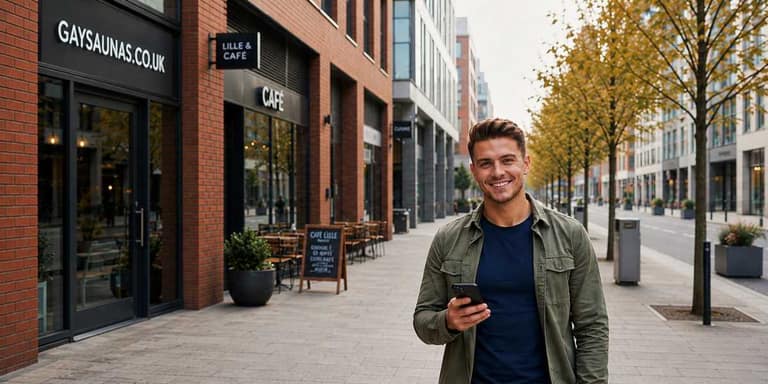
Find Gay Saunas Across the UK
Find nearby venues to easily compare opening times, entry prices and facilities. Results are automatically sorted by distance.
Last verified on 29 | 09 | 2026Location data is never stored.
No location selected yet.
Updated Hourly
Most Viewed
See which saunas are attracting the most attention right now.
The Sauna Reports
First visit guides
New to saunas? Start here.

How to Prepare for Your First Gay Sauna Visit | UK Guide
Why read it: Everything to sort before your first gay sauna visit: sexual health, what to pack, body confidence, timing, and nerves. Plain-spoken UK answers.

Who Can Go to a Gay Sauna?
Why read it: Gay saunas welcome all men — gay, bi, curious, or questioning. UK guide covering trans inclusion, disability access, body image, HIV, and what to expect.

Arriving at a Gay Sauna: What Happens in the First 15 Minutes
Why read it: Step-by-step guide to your first 15 minutes at a UK gay sauna — from buzzer to locker to towel. Know exactly what happens at check-in.

Gay Sauna Facilities Explained: What Every Room Is For | UK Guide
Why read it: What every room in a UK gay sauna is for — from steam rooms and jacuzzis to dark rooms, glory holes, and sling rooms. Full facility guide series.

Gay Sauna Etiquette and Consent
Why read it: Master UK gay sauna etiquette and consent culture—from non-verbal signals to handling rejection. The unwritten rules that make shared intimate space work.

Health & Safety at Gay Saunas: The 2026 UK Guide
Why read it: PrEP, doxyPEP, vaccines, testing, consent, heat safety and chemsex — the complete UK health and safety guide for gay sauna visitors. Updated March 2026.
The basics
What Is a Gay Sauna?
A gay sauna - also called a men's sauna, male sauna, or gay bathhouse - is a private venue for men who have sex with men. Every UK gay sauna includes wet facilities like steam rooms, dry saunas, and showers.
These venues are open to gay, bisexual, bi-curious, and questioning men. You don't need to identify as anything to visit.
Good to know
Common Questions
Do you have to be gay?
No. UK gay saunas welcome men of all sexual orientations - gay, bisexual, bi-curious, and questioning. No venue asks you to identify or explain yourself.
Can you go on your own?
Yes - most people do. Venues are designed for solo attendance: single-occupancy lockers, individual towels, no plus-one required.
Do you have to have sex?
No. Sexual activity is available but never expected, required, or assumed. Many visitors use only the wet facilities - steam rooms, saunas, jacuzzis.
What do you need to bring?
Photo ID and a way to pay. Most venues provide a towel, locker, and basic toiletries with your entry fee. You're in control the entire time.
Browse venues
Directory
Primary
Home & Search
The UK’s gay sauna directory and guide. Verified opening times, prices and reviews for every venue, plus clear guides on etiquette, consent and sexual health.
Primary
Find a sauna
Find the nearest gay sauna to your location right now. Our live UK locator covers the whole of the UK — see opening hours, entry prices and facilities.
Directory
Every gay sauna in the UK
The most comprehensive directory of gay saunas across England, Scotland, Wales, and Northern Ireland. Current prices, opening hours, facilities…
Guides
All Sauna Guides
New to the scene? Our comprehensive gay sauna guides cover everything from what to pack and locker room etiquette to consent, safety, and overcoming nerves.
More
Sauna FAQs
Clear beginner answers about what gay saunas are, what to bring, consent, boundaries, hygiene, safer sex and first-time nerves.
More
About us
Gaysaunas.co.uk is the UK’s free, private gay sauna directory — verified prices, reviews, a live locator, and beginner guides. No sign-up needed.
More
Events
Browse UK gay sauna event brands and organisers in one place, with direct links to their own websites for current dates, tickets and details.
More
Add/Update a Sauna
Get in touch with GaySaunas.co.uk for venue listing updates, event organiser enquiries, advertising and editorial feedback. UK-based directory.
Homepage linked
Privacy
This Privacy Policy describes how GaySaunas.co.uk (“we”, “us”, or “our”) collects, uses, and shares your personal information when you visit our website.
Homepage linked
Terms
This Terms & Conditions agreement is designed for a directory and review site like GaySaunas.co.uk. It clarifies that you provide information only and are not responsible for the actual operation of the venues listed.
Guides
Advanced Sauna Advice
Beyond the basics: honest UK advice on sauna costs, body confidence, disability access, trans inclusion, couples, and knowing when your pattern needs a reset.
Guides
After Your Visit
Your after-visit checklist: PEP timelines, STI testing windows, emotional aftercare, and UK support. A practical guide from people who know.
Guides
Arriving at a Gay Sauna
Step-by-step guide to your first 15 minutes at a UK gay sauna — from buzzer to locker to towel. Know exactly what happens at check-in.
Guides
Etiquette and Consent
Master UK gay sauna etiquette and consent culture—from non-verbal signals to handling rejection. The unwritten rules that make shared intimate space work.
Guides
Gay Sauna Facilities
What every room in a UK gay sauna is for — from steam rooms and jacuzzis to dark rooms, glory holes, and sling rooms. Full facility guide series.
Guides
Going Alone or With a Friend
Most gay sauna visitors go alone. Find out how to decide between solo and with a friend, what each option actually involves, and how to prepare.
Guides
Health and Safety
PrEP, doxyPEP, vaccines, testing, consent, heat safety and chemsex — the complete UK health and safety guide for gay sauna visitors. Updated March 2026.
Guides
History of Gay Saunas
UK gay saunas were built under threat of prosecution and survived the AIDS crisis. How they got here — and why they still matter.
Guides
Who’s Welcome at Gay Saunas
Gay saunas welcome all men — gay, bi, curious, or questioning. UK guide covering trans inclusion, disability access, body image, HIV, and what to expect.
Guides
Preparing for Your First Visit
Everything to sort before your first gay sauna visit: sexual health, what to pack, body confidence, timing, and nerves. Plain-spoken UK answers.
Guides
Sexual Health Resources
Verified UK sexual health services, crisis helplines, PrEP access, and LGBT+ support for gay and bisexual men. Free NHS clinics, testing, and vaccinations.
Homepage linked
England 34 venues
From multi-floor complexes in London and Manchester to well-established local favourites in Birmingham, Leeds, Brighton, and beyond. Every venue listed with…
Homepage linked
Birmingham
Two Birmingham listings: Yumbo at Hockley Hill and Spartan Health Club in Erdington. Just For You’s former Summer Hill Road venue is closed.
Homepage linked
Blackpool
Two venues in Blackpool town centre. Acqua Sauna and W3 Sauna, both verified with current prices, hours, and facilities.
Regions
East Midlands
Explore the best gay saunas in the East Midlands for 2026. Get up-to-date entry prices, opening hours, and venue reviews for Nottingham, Leicester, Derby…
Homepage linked
Leeds
Find your nearest Leeds gay sauna instantly—complete listings, snapshot reviews & over 100 expert guides for safer, steamy fun at GaySaunas.co.
Regions
London
Six venues across Soho, Covent Garden, Waterloo, Kennington and East London. Every listing verified with current prices, hours…
Regions
North East
Two venues serving the North East region: Number 52 Sauna in Newcastle and Greenhouse Sauna in Luton. Every listing verified with current prices, hours…
Regions
North West
Eight venues across Manchester, Blackpool, Merseyside, Bury, Shaw, Northwich and Carlisle. Every listing verified with current prices, hours, and facilities.
Regions
South East
Explore the best gay saunas in South East England with our 2026 guide. Find latest entry prices, opening hours, and reviews for venues in Brighton, Hove…
Regions
South West
Four gay saunas across Plymouth, Bournemouth, Torquay and Swindon, plus Redruth’s Monday social and play club in Cornwall. Redruth has no sauna or hot tub.
Yorkshire & Humberside
South Yorkshire
ClubZeus Sheffield is open at 208 Savile Street East. Current opening hours, membership, prices and facilities, with the former Boiler Room listing preserved.
M–S
Sheffield
The Boiler Room Sheffield has closed. Its premises reopened as ClubZeus Sheffield under new owners on 21 August 2026. Find the new venue listing.
Regions
West Midlands
Four venues across Birmingham, Stourbridge and Darlaston, including Yumbo at Hockley Hill. The former Just For You premises are closed.
Yorkshire & Humberside
West Yorkshire
West Yorkshire venue listings and visitor information. Steam Complex is temporarily closed pending relocation; see current open alternatives.
Homepage linked
Northern Ireland 1 venue
Explore the premier gay sauna in Northern Ireland for 2026. Get the latest entry prices, opening hours, and venue details for Outside Sauna in Belfast.
Yorkshire & Humberside
Scotland
Explore the top gay saunas in Scotland for 2026. Get up-to-date entry prices, opening hours, and venue reviews for Glasgow’s Pipeworks and Edinburgh’s…
Yorkshire & Humberside
Wales
Greenhouse Sauna in Newport is Wales’ only dedicated gay sauna. Full listing with current prices, opening hours, and facilities verified for 2026.
Blackpool
Acqua Sauna Blackpool
Verified on 2 Aug 2026. Latest prices, opening times, events, facilities and reviews.
Manchester
Basement Complex Manchester
Verified on 4 Sep 2026. Opening times, non-age-based prices and events checked.
Mansfield
Club Zeus Sauna Mansfield
Verified on 2 Aug 2026. Latest prices, opening times, events, facilities and reviews.
London
Covent Garden Health Spa London
Verified on 2 Aug 2026. Latest prices, opening times, events, facilities and reviews.
New Brighton
Dolphin Sauna Merseyside
Verified on 2 Aug 2026. Latest prices, opening times, events, facilities and reviews.
London
E15 Club London
Verified on 2 Aug 2026. Latest prices, opening times, events, facilities and reviews.
Hull
Gentry Spa Hull
Verified on 2 Aug 2026. Latest prices, opening times, events, facilities and reviews.
Newport
Greenhouse Gay Sauna Newport
Verified on 4 Sep 2026. Opening times, non-age-based prices and events checked.
Luton
Greenhouse Sauna Luton
Verified on 4 Sep 2026. Opening times, non-age-based prices and events checked.
Stourbridge
Heroes Sauna Stourbridge
Verified on 29 Sep 2026. Opening times, non-age-based prices and events checked.
Birmingham
Just For You Birmingham (Closed)
Verified on 8 Sep 2026. Permanently closed; this page is retained for venue history and current alternatives.
2 Union Street
Manticore Spa Plymouth
Verified on 2 Aug 2026. Latest prices, opening times, events, facilities and reviews.
Medway
ME1 Sauna Rochester
Verified on 2 Aug 2026. Latest prices, opening times, events, facilities and reviews.
Bury
Neros Sauna Bury
Verified on 2 Aug 2026. Latest prices, opening times, events, facilities and reviews.
Newcastle
Number 52 Sauna Newcastle
Verified on 2 Aug 2026. Latest prices, opening times, events, facilities and reviews.
Belfast
Outside Sauna Belfast
Verified on 2 Jul 2026. Latest prices, opening times, events, facilities and reviews.
Shaw
Pennine Sauna
Verified on 2 Jul 2026. Latest prices, opening times, events, facilities and reviews.
Leeds
Pipeworks Leeds
Verified on 10 Sep 2026. Opening times, non-age-based prices and events checked.
Eastborough
Plastic Ivy Sauna Dewsbury
Verified on 29 Sep 2026. Opening times, non-age-based prices and events checked.
London
Pleasuredrome Gay Sauna London
Verified on 29 Sep 2026. Opening times, non-age-based prices and events checked.
London
Sailors Sauna London
Verified on 8 Sep 2026. Opening times, non-age-based prices and events checked.
Northwich
Sauna Sauna Northwich
Verified on 2 Aug 2026. Latest prices, opening times, events, facilities and reviews.
Bournemouth
SaunaBar Bournemouth
Verified on 2 Aug 2026. Latest prices, opening times, events, facilities and reviews.
Birmingham
Spartan Club Birmingham
Verified on 2 Jul 2026. Latest prices, opening times, events, facilities and reviews.
Leicester
Splash Spa Leicester
Verified on 2 Aug 2026. Latest prices, opening times, events, facilities and reviews.
Rock Road
Steamer Quay Sauna Torquay
Verified on 4 Sep 2026. Opening times, non-age-based prices and events checked.
Edinburgh
Steamworks Gay Sauna Edinburgh
Verified on 18 Jul 2026. Latest prices, opening times, events, facilities and reviews.
Nelson Street
Sweat Sauna Carlisle
Verified on 29 Sep 2026. Opening times, non-age-based prices and events checked.
London
Sweatbox Soho London
Verified on 29 Sep 2026. Opening times, non-age-based prices and events checked.
Hove
The Boiler Room Sauna Brighton
Verified on 29 Sep 2026. Opening times, non-age-based prices and events checked.
Brighton
The Brighton Sauna
Verified on 29 Sep 2026. Opening times, non-age-based prices and events checked.
Darlaston
The Greenhouse Sauna Darlaston
Verified on 2 Aug 2026. Latest prices, opening times, events, facilities and reviews.
London
The Locker Room Gay Sauna London
Verified on 2 Aug 2026. Latest prices, opening times, events, facilities and reviews.
Glasgow
The Pipeworks Glasgow
Verified on 2 Aug 2026. Latest prices, opening times, events, facilities and reviews.
9 Henry St
Touch Sauna Swindon
Verified on 4 Sep 2026. Opening times, non-age-based prices and events checked.
Portsmouth
Tropics Day Spa, Portsmouth
Verified on 2 Aug 2026. Latest prices, opening times, events, facilities and reviews.
Blackpool
W3 Sauna Blackpool
Verified on 2 Aug 2026. Latest prices, opening times, events, facilities and reviews.
Sheffield
ClubZeus Sheffield
Verified on 7 Sep 2026. Latest prices, opening times, events, facilities and reviews.
Huddersfield
Empire Cinema Club Huddersfield
Verified on 4 Sep 2026. Opening times, non-age-based prices and events checked.
Redruth
Redruth — Social & Play Club (former sauna)
Verified on 8 Sep 2026. Latest prices, opening times, events, facilities and reviews.
Birmingham
Yumbo Birmingham
Verified on 8 Sep 2026. Opening times, non-age-based prices and events checked.
Guides
Arriving at a Gay Sauna: What Happens in the First 15 Minutes
Step-by-step guide to your first 15 minutes at a UK gay sauna — from buzzer to locker to towel. Know exactly what happens at check-in.
Guides
Gay Sauna Etiquette and Consent
Master UK gay sauna etiquette and consent culture—from non-verbal signals to handling rejection. The unwritten rules that make shared intimate space work.
Guides
Cruising Mazes in Gay Saunas: What to Expect (UK Guide)
What a cruising maze is, how they work, unwritten rules, and which UK gay saunas have them. A practical guide for first-timers and regulars.
Guides
Dark Rooms in Gay Saunas: What to Expect (UK Guide)
What a dark room is, how consent works in the dark, unwritten rules, and which UK gay saunas have them. A practical guide for first-timers and regulars.
Guides
Dungeons in Gay Saunas: UK Guide to Kink & Fetish Rooms
What a dungeon in a UK gay sauna is, what equipment to expect, how play starts, the unwritten rules, and which venues have dungeon facilities.
Guides
Glory Holes in Gay Saunas — What They Are & How They Work
What glory holes are, why men use them, what to expect, and the unwritten rules. A practical guide to glory hole etiquette in UK gay saunas.
Guides
Glory Holes in Gay Saunas: Safe Etiquette Guide
Navigate glory holes in gay saunas safely with tips on consent, signalling, and hygiene—perfect for UK men seeking discreet, respectful anonymous play in…
Guides
Jacuzzis in Gay Saunas — What to Expect and How They Work
What the jacuzzi is for in a UK gay sauna, unwritten rules, what’s OK in the water, and which venues stand out. Practical guide for all visitors.
Guides
Private Cabins in Gay Saunas: What to Expect (UK Guide)
What private cabins in UK gay saunas are, how they work, door signals, and which venues offer them. A practical guide for all experience levels.
Guides
Sling Rooms in Gay Saunas: What to Expect (UK Guide)
What a sling room is, how consent works, unwritten rules, and which UK gay saunas have them. A practical guide for first-timers and regulars…
Guides
Steam Rooms in Gay Saunas: What to Expect (UK Guide)
What the steam room in a UK gay sauna is actually like — how it works, what happens, cruising signals, and which venues have one.
Guides
Gay sauna facilities explained
What every room in a UK gay sauna is for — from steam rooms and jacuzzis to dark rooms, glory holes, and sling rooms. Full facility guide series.
Guides
Going alone or with a friend?
Most gay sauna visitors go alone. Find out how to decide between solo and with a friend, what each option actually involves, and how to prepare.
Guides
Gay sauna facilities explained
What every room in a UK gay sauna is for — from steam rooms and jacuzzis to dark rooms, glory holes, and sling rooms. Full facility guide series.
Guides
How to Prepare for Your First Gay Sauna Visit
Everything to sort before your first gay sauna visit: sexual health, what to pack, body confidence, timing, and nerves. Plain-spoken UK answers.
Guides
UK Sexual Health & Support Resources for Gay & Bi Men
Verified UK sexual health services, crisis helplines, PrEP access, and LGBT+ support for gay and bisexual men. Free NHS clinics, testing, and vaccinations.
Guides
What to Do After Your Visit
Your after-visit checklist: PEP timelines, STI testing windows, emotional aftercare, and UK support. A practical guide from people who know.
SEXUAL HEALTH · PHYSICAL SAFETY · WELLBEING
Health & Safety at Gay Saunas: The 2026 UK Guide
PrEP, doxyPEP, vaccines, testing, consent, heat safety and chemsex — the complete UK health and safety guide for gay sauna visitors. Updated March 2026.
In brief
- Prevention / Layer your toolkit The 2026 prevention toolkit is the strongest it has ever been. PrEP, doxyPEP, condoms, vaccinations, and regular testing used together give you more protection than any previous generation has had.
- Testing / Screen every 3 months Testing is maintenance, not moral reckoning. Screen for STIs every three months if you are having condomless sex with new or multiple partners. Many infections are asymptomatic — you can carry and pass them on without feeling unwell.
- Physical safety / Respect the heat Dry saunas run up to 90°C and genuinely stress the heart. Hydrate every 30–45 minutes, take real breaks, and exit immediately if you feel dizzy, nauseous, or stop sweating.
01 Understanding STI Risk in Sauna Environments
How STI Risk Actually Works in Saunas
Sexual contact with multiple partners — which is possible and sometimes common in sauna settings — increases STI exposure risk compared to monogamous relationships or no sexual activity. This is statistical reality, not moral judgement.
But “increased risk” is not a single, undifferentiated thing. Different activities carry different transmission probabilities for different infections, and understanding this allows you to make proportionate decisions rather than operating from a binary of “safe” versus “unsafe.”
Anal intercourse carries the highest risk for HIV and most bacterial STIs, with the receptive partner facing greater risk than the insertive partner in most cases. Oral sex carries meaningfully lower HIV transmission risk, though it remains a significant route for gonorrhoea (particularly throat infection) and syphilis. Mutual masturbation and body contact carry minimal STI risk.
Kissing transmits some infections (herpes, and syphilis if a chancre is present) but not others.
The practical takeaway is not that some activities are “safe” and others “dangerous” — it is that risk exists on a spectrum, and each tool in your prevention toolkit addresses different parts of that spectrum. Condoms dramatically reduce risk for penetrative sex. PrEP eliminates virtually all HIV risk. DoxyPEP substantially reduces syphilis risk. Vaccinations protect against mpox, hepatitis, and HPV. Regular testing catches what slips through. Used together, these tools give you a level of protection that was simply not available five years ago.
Which STIs Are Most Common Among MSM
The most commonly diagnosed STIs among men who have sex with men attending UK sexual health clinics are gonorrhoea, chlamydia, and syphilis. HIV remains the most consequential in terms of long-term health impact if untreated, though with modern antiretroviral therapy it is a manageable chronic condition — and with PrEP, it is almost entirely preventable.
It is also worth knowing that someone living with HIV who is on effective treatment and has an undetectable viral load cannot pass on the virus sexually. This principle — known as U=U (Undetectable = Untransmittable) — is backed by extensive evidence and is now a cornerstone of HIV prevention messaging worldwide.
Gonorrhoea deserves particular mention because it is increasingly resistant to antibiotics. The UK has seen progressive resistance to first-line treatments, and the latest UKHSA GRASP surveillance data (to September 2025) shows tetracycline resistance in gonococcal isolates at 90.7%.
Syphilis has been rising steadily among men who have sex with men in the UK for over a decade. It is highly treatable when caught early, but left undetected it progresses through stages that become increasingly serious. The good news is that doxyPEP now provides a meaningful prevention layer specifically for syphilis.
Mpox remains a relevant concern. Since 2022, over 4,500 clade IIb cases have been confirmed in the UK, with transmission primarily occurring within networks of gay, bisexual, and other men who have sex with men. Cases have been rising in early 2026, particularly in London and the north of England, with some clade Ib cases now identified without travel links. Mpox transmits through close skin-to-skin contact, making sauna environments a recognised transmission context.
Hepatitis A transmits through oral-anal contact. Hepatitis B transmits through sexual contact. Both are entirely preventable by vaccination. HPV — preventable by vaccine — causes genital warts and is linked to several cancers.
02 Your Prevention Toolkit — What Is Available Now
Condoms and Lubricant — Still the Foundation of Safer Sex
Condoms remain the single most versatile prevention tool — the only method that simultaneously reduces risk for HIV, gonorrhoea, chlamydia, syphilis, hepatitis B, and HPV during penetrative sex. Most UK gay saunas provide free condoms and water-based or silicone-based lubricant in communal areas, typically in dispensers near play areas and private cabins.
Use adequate lubricant — this reduces condom breakage and tissue microtrauma that increases infection risk. Venues provide it for exactly this reason, and using it generously is sensible practice.
Check condom integrity before use. Dispensed condoms are occasionally damaged or expired. Check the date, ensure the packet is intact, and if a condom breaks during sex, stop immediately, clean the area, and consider post-exposure prophylaxis options if HIV exposure is a concern.
There are practical reasons to carry a few of your own as well. You may have a preferred brand or a specific size that fits better. Having two or three condoms and a sachet of lube in your locker means you are never reliant on availability in the moment.
PrEP — HIV Prevention That Works
PrEP (Pre-Exposure Prophylaxis) is a daily medication — typically tenofovir/emtricitabine (Truvada or generic equivalents) — that prevents HIV infection with around 99% efficacy when taken as prescribed. If you are sexually active with multiple partners or in contexts like gay saunas, PrEP is worth serious consideration.
In the UK, PrEP is available free through NHS sexual health clinics. Access is direct, confidential, and does not involve your GP. You will need regular monitoring — kidney function tests and STI screening every three months — but this also means you are getting comprehensive sexual health checks as a matter of routine.
The 2025 BASHH/BHIVA PrEP guidelines now also recommend TAF-FTC as an option alongside the original TDF-FTC formulation, with a potentially improved safety profile for kidneys and bones. Your clinician can discuss which is most appropriate for you.
Consistent daily use is essential. PrEP only works when taken as prescribed. Event-based dosing (sometimes called “on-demand” PrEP) is an alternative regimen taken around the time of sexual activity rather than daily — a practical option if you visit saunas occasionally rather than regularly. Discuss this with your sexual health clinician if a daily regimen does not suit your circumstances.
Long-acting injectable PrEP (cabotegravir, brand name Apretude) is also now included in the 2025 BASHH/BHIVA guidelines. It involves an injection every two months rather than a daily pill. In October 2025, NICE recommended cabotegravir on the NHS for people at high risk of HIV who cannot have or take oral PrEP.
DoxyPEP — The New Tool for Syphilis Prevention
DoxyPEP (doxycycline post-exposure prophylaxis) is the newest addition to the sexual health toolkit for MSM in the UK. In 2025, the British Association for Sexual Health and HIV (BASHH) published the UK’s first formal clinical guidelines recommending doxyPEP for syphilis prevention in gay, bisexual, and other men who have sex with men.
The regimen is a single 200mg dose of doxycycline taken within 72 hours of condomless sex — ideally within 24 hours. The evidence base from US and European trials shows substantial reduction in syphilis incidence among MSM, with consistent positive data for chlamydia prevention too.
Important caveats: doxyPEP has no meaningful effect on gonorrhoea prevention in the UK specifically, because UK gonococcal strains show tetracycline resistance exceeding 90%. And doxyPEP does not prevent HIV, mpox, hepatitis, or HPV. It is one specific tool with one main application — add it to your toolkit, not substitute it for everything else.
Access doxyPEP through your NHS sexual health clinic. It is not currently available on routine prescription through GPs. Discuss with your clinician whether it is appropriate for your circumstances.
The NHS Gonorrhoea Vaccine — What You Need to Know Now
In August 2025, NHS England launched a national vaccination programme using the 4CMenB vaccine (Bexsero) for gonorrhoea prevention in gay, bisexual, and other men who have sex with men at higher risk. This followed evidence that the meningitis B vaccine offers partial cross-protection against gonorrhoea.
The evidence is partial: a randomised controlled trial (GoGoVax, presented at CROI 2026) found that the 4CMenB vaccine does not prevent gonorrhoea infection as robustly as initial observational data suggested. The programme continues, but it is not a reliable standalone gonorrhoea prevention tool.
Ask your sexual health clinician whether you are eligible. Vaccine eligibility is typically based on risk factors including number of recent partners and STI history. The programme is available at NHS sexual health clinics and some GP practices.
Mpox, Hepatitis, and HPV Vaccinations
Mpox vaccination (the Imvanex vaccine, two doses four weeks apart) is available free on the NHS to eligible MSM at higher risk. Cases have been rising in 2026 and vaccination remains the single most effective prevention measure. If you are not vaccinated, contact your local sexual health clinic.
Hepatitis A and hepatitis B vaccines are both available free to MSM on the NHS and provide complete protection against these infections. If you have not had these vaccines — or are unsure — your sexual health clinic can check your status and vaccinate if needed.
HPV vaccination (Gardasil 9) is now available free to MSM up to age 45 in England through sexual health clinics. HPV causes genital warts and is linked to anal, penile, and throat cancers. If you are under 45 and have not been vaccinated, it is worth getting.
PEP — The 72-Hour Emergency Safety Net
PEP (Post-Exposure Prophylaxis) is emergency antiretroviral medication that can prevent HIV infection if started within 72 hours of a potential exposure. Earlier is better — the evidence for starting within 24 hours is stronger. After 72 hours it is unlikely to be effective.
In the UK, PEP is available 24 hours a day through A&E departments. This is the most reliable route outside clinic hours. Some sexual health clinics also provide PEP during daytime hours. You do not need a GP referral.
PEP involves a 28-day course of medication with possible side effects including nausea, fatigue, and headaches. It is not an everyday substitute for PrEP — it is an emergency measure. But if prevention has failed in a way that creates meaningful HIV exposure risk, do not delay seeking it.
Regular Testing — Your Routine Sexual Health Check
Testing is the one tool that catches what everything else misses. Even with optimal use of condoms, PrEP, and doxyPEP, regular testing remains essential because no combination of prevention tools has perfect coverage, and early diagnosis enables prompt treatment that protects both your health and that of your partners.
The recommended frequency for sexually active MSM is every three months if you are having condomless sex with new or multiple partners. Annual testing is appropriate for lower-risk individuals.
A comprehensive screen for MSM should include: HIV (combined antigen/antibody test), syphilis (blood test), gonorrhoea (urine sample plus throat and rectal swabs), and chlamydia. Many sexual health clinics also offer hepatitis B and C screening and HPV-related checks at the same appointment.
Home testing kits are available free through some local authorities and sexual health services — convenient and genuinely confidential. They do not replace clinical testing entirely (home kits miss throat and rectal sites) but are a useful supplement between clinic visits.
03 Physical Safety in Heat and Wet Environments
Heat Stress, Hydration, and Knowing When to Get Out
This part gets underestimated more than almost anything else. Steam rooms sit around 40–50°C with high humidity. Dry saunas run between 70°C and 90°C. Both put real stress on your cardiovascular system — your heart rate climbs, blood vessels dilate, blood gets redirected to the skin surface for cooling. Add sexual activity on top and you are asking your body to handle two significant demands at once.
For healthy people, this is manageable. But it means pacing yourself and taking proper breaks. The warning signs to act on: dizziness, nausea, rapid or irregular heartbeat, confusion, muscle cramps. And the big one — if you stop sweating despite being in a hot environment, your body’s cooling system has failed. Get out of the heat immediately.
Hydration is simple but non-negotiable. Drink water before you arrive. Drink it every 30–45 minutes during your visit. You lose far more fluid through sweat than you realise, especially in steam rooms where you cannot gauge your own sweat loss because everything around you is already wet. Alcohol before or during a visit is a genuinely bad idea — it is a diuretic that increases fluid loss exactly when your body needs to hold onto water.
Slips, Falls, and Moving Safely in Wet Environments
Wet tiled surfaces, dim lighting, steam cutting visibility — real slip hazards. Unglamorous topic, but slips and falls are one of the most common ways people actually get hurt in these environments. Walk deliberately on tiled surfaces. Use handrails where they are provided. Enter and exit jacuzzis and pools slowly. Be particularly cautious in steam rooms where visibility may be minimal.
If you slip or fall, assess yourself before getting up — particularly if you have hit your head. Report the incident to staff, especially if you are injured. Head injuries warrant medical attention even if you feel fine initially.
Infections from Shared Facilities
Communal wet environments can harbour bacteria and fungi, though reputable venues maintain rigorous cleaning protocols. The most common infections from shared facilities are athlete’s foot, verrucas, and folliculitis — all generally minor and treatable. Prevention requires no effort beyond basic hygiene: shower before and after using facilities, sit on your own towel on all shared surfaces, and avoid sharing towels.
Pre-Existing Health Conditions — When to Seek Medical Advice First
If you have cardiovascular disease, high or low blood pressure, diabetes, respiratory conditions, or have had recent surgery, consult your GP about sauna use before visiting. Many people with these conditions can use saunas safely with appropriate precautions, but this requires an individual assessment.
04 Consent, Boundaries, and Personal Safety
How Consent Works in a Non-Verbal Environment
Gay saunas are explicitly sexual environments, and much of the communication within them is non-verbal. This is not a bug — it is how these settings function, and for many men it is part of what makes them appealing. But the non-verbal nature of sauna interaction does not change the fundamental requirement for consent; it changes the mechanics of how consent is communicated.
In practice, consent negotiation typically operates through a progression: eye contact and sustained mutual gaze as an initial expression of interest, physical proximity and positioning, light initial touch, and escalation based on reciprocation. At each stage, the other person’s response is your answer. Moving closer, reciprocating touch, making further eye contact — that is engagement. Moving away, breaking eye contact, turning their body away, or remaining unresponsive — that is a decline.
The principle underneath all of it is straightforward: being in the building is not consent to anything. Each interaction, with each person, requires its own negotiation. The absence of a spoken “no” is not a yes. For a full treatment of how consent and communication work in these settings, including the legal position and how to handle boundary violations, see our Etiquette and Consent guide.
When Boundaries Are Crossed — What to Do
If you have said no — clearly, whether with words or body language — and the person persists, that is no longer an awkward social moment. That is a boundary violation, and you have every right to escalate. Repeat your refusal firmly and audibly. If they continue, move away from them physically. Then speak to a member of staff — this is exactly what they are there for.
Reporting matters even when the incident feels minor. Staff can only identify patterns if they receive reports. If you witness someone else being harassed or in obvious discomfort, a simple “you alright?” directed at the person being bothered, or a quiet word to staff, is effective bystander action — one of the most reliable safety tools in these settings.
Consent, Capacity, and Intoxication
The legal position under the Sexual Offences Act 2003 is clear: consent means agreeing by choice while having the freedom and capacity to make that choice. When someone is intoxicated to the point where they cannot understand what is happening or weigh a decision, they cannot legally consent. Proceeding regardless is sexual assault. If you encounter someone who appears incapacitated — unable to respond coherently, barely conscious, or clearly not in control of their faculties — alert venue staff.
05 Alcohol, Substances, and Chemsex Risks
Most venues have café or lounge areas where alcohol is served, and you may encounter others who have used substances before arrival despite venue policies. Your safety considerations are straightforward: monitor your own alcohol intake, be aware that substances impair judgement and physical coordination in heat environments, and never accept drinks or substances from someone you do not know.
Chemsex — the use of specific drugs such as crystal methamphetamine, mephedrone, or GHB/GBL in sexual contexts — is explicitly prohibited in gay saunas and creates serious, compounding health risks. GHB/GBL in particular has a narrow margin between a “recreational” dose and a dose that causes unconsciousness, and this margin narrows further with dehydration and heat exposure. If you encounter someone promoting chemsex or observe someone who appears to be in medical distress, alert venue staff immediately.
If you personally struggle with chemsex use, support is available without judgement. Antidote, part of London Friend, is the UK’s only LGBTQ+-run drug and alcohol support service and provides specialist chemsex support. 56 Dean Street in London also offers chemsex-specific services. Local NHS drug and alcohol services are available nationwide — your sexual health clinic or GP can refer you, or you can self-refer.
06 Mental Health, Emotional Wellbeing, and the Psychology of Sauna Use
Body Image in Settings That Centre Physical Attraction
Gay saunas are environments where bodies are visible and attraction is explicitly expressed. For some men, this is liberating; for others, it can trigger significant body image anxiety — particularly if you do not feel you match the idealised body standards that circulate in parts of the gay community.
The reality, when you actually visit, is that body diversity in UK saunas is dramatic. You will see men of every age, build, ethnicity, and fitness level. Attraction — as anyone who has spent time in a sauna quickly learns — is subjective, variable, and frequently surprising. If you experience explicit body shaming — rare but not unknown — that reflects the other person’s character, not your worth.
Rejection, Validation, and Keeping Perspective
Gay saunas can feel like high-stakes environments for self-esteem if you let them. The direct, physical nature of cruising means rejection is visible and immediate. The useful perspective shift is this: a sauna is a snapshot of whoever happens to be there at that particular time. If you visit on a Tuesday afternoon and nobody makes eye contact, that tells you almost nothing about your attractiveness and quite a lot about who visits on a Tuesday afternoon.
If you notice that you are visiting primarily because you need the validation, or that you feel significantly worse after visiting than before, that is worth paying attention to. Sauna use should be a net positive in your life. If it is consistently not, stepping back and reflecting — or speaking to someone you trust — is a sign of self-awareness, not weakness.
When Sauna Use Becomes Compulsive
For some men, sauna visits can develop a compulsive quality — visiting more frequently than intended, spending more money than planned, or continuing despite negative consequences. This is not about moral failure. Compulsive patterns around sexual behaviour are well-recognised, and support is available. If you are concerned, your GP can refer you to appropriate services. Switchboard LGBT+ is available on 0800 0119 100 (10am to 10pm, seven days a week) for confidential support and signposting.
07 How to Evaluate a Venue — What Good Looks Like
Not all venues maintain the same standards. Well-run venues share recognisable characteristics: clean facilities with regular visible cleaning, free condoms and lubricant in communal areas, adequate staffing with visible staff presence, clear signage about house rules and emergency procedures, and working ventilation in steam and sauna areas.
Condom availability is worth paying particular attention to as a proxy indicator. Venues that invest in comprehensive, freely accessible prevention supplies tend to invest in safety culture more broadly. If a venue does not provide free condoms and lubricant, that signals a broader attitude towards patron welfare.
Red flags include visibly unclean facilities, absent or unavailable barrier protection, staff who are entirely absent or unresponsive when needed, tolerance of aggressive behaviour, and lighting so inadequate that it creates genuine safety hazards.
The GaySaunas.co.uk UK Gay Sauna Directory includes user reviews that frequently address safety and cleanliness standards. Research before you visit, particularly if you are trying a new venue. If you encounter a venue with seriously inadequate standards, report your concerns to local environmental health authorities — these venues are licensed premises subject to local authority regulation.
08 Emergency Response — When Something Serious Happens
Medical Emergency
If someone collapses, loses consciousness, has a seizure, shows signs of a severe allergic reaction, or has a cardiac event — call 999 immediately. Do not wait for staff approval. Do not delay because you are embarrassed about where you are. While waiting for emergency services: alert venue staff so they can direct paramedics to the right location. If the person is unconscious but breathing, place them in the recovery position. If a defibrillator is available and the person is in cardiac arrest, use it — they are designed for untrained users.
Heat-Related Illness
If someone shows signs of heat exhaustion (heavy sweating, rapid pulse, nausea, dizziness, cool/clammy skin) — move them to a cool area, give them water, apply cool cloths to the skin. If symptoms do not improve within 15–20 minutes, or if they worsen to confusion, hot/dry skin (no sweating), or loss of consciousness, call 999 — this may be heatstroke, which is a medical emergency.
Sexual Assault
If you have been sexually assaulted, your immediate priorities are your safety and your health. You do not need to make any decisions about reporting right now. Go to a safe area in the venue and tell a member of staff what has happened — they have a duty to support you.
For medical needs, A&E departments can provide PEP (if relevant), treat injuries, and connect you with NHS Sexual Assault Referral Centre (SARC) services. SARCs can collect forensic evidence even if you are unsure about reporting to police — evidence can be stored while you decide. Galop provides specialist support for LGBT+ people who have experienced abuse: 0800 999 5428. Rape Crisis England & Wales runs a 24/7 helpline: 0808 500 2222.
09 Building Your Personal Safety Approach
A simple before, during, and after framework that puts the information in this guide into a practical routine.
Before visiting: ensure your STI testing is current and you know your HIV status. Consider whether PrEP and doxyPEP are appropriate for your circumstances — if you have not discussed these with a clinician, do so at your next sexual health appointment. Check that your vaccinations are up to date (hepatitis A, hepatitis B, HPV, mpox). Hydrate before you arrive. Do not attend if you are unwell.
During your visit: use condoms consistently. Monitor your heat exposure and take genuine breaks between sessions — cool down, drink water, sit in the lounge area. Trust your instincts about situations that feel uncomfortable, and enforce your boundaries without apology.
After your visit: maintain your regular testing schedule. Address any health concerns promptly — do not wait for the next routine appointment if you have a specific worry. If PEP may be needed, seek it immediately rather than waiting to see.
This is not about creating anxiety or turning every visit into a military operation. It is about building habits of informed self-care that allow you to enjoy these settings confidently and sustainably over the long term.
10 Putting It All in Perspective
This guide covers a substantial number of risks and precautions, which might create the impression that gay saunas are hazardous environments requiring constant vigilance. They are not. Millions of visits to UK gay saunas occur every year without incident. The vast majority of regular users maintain good health, experience no safety problems, and find these venues genuinely valuable for connection, relaxation, sexual expression, and community.
The prevention toolkit available to men who have sex with men in the UK in 2026 is, by historical standards, extraordinary: PrEP, doxyPEP, mpox vaccination, hepatitis and HPV vaccines, comprehensive free testing, PEP as a safety net, and venues that provide barrier protection at no cost. Previous generations of gay and bisexual men managed these environments with a fraction of these resources.
You now have the knowledge to protect yourself and make informed decisions. Find your nearest venue in the UK Gay Sauna Directory and visit with informed confidence. For every helpline, clinic, charity, and service mentioned in this guide — plus more — bookmark our comprehensive UK Sexual Health Support Resources for Gay & Bisexual Men.
- NHS Sexual Health Clinics — free, confidential, no GP referral needed: nhs.uk
- Terrence Higgins Trust — HIV and sexual health information, support, advocacy: tht.org.uk
- 56 Dean Street — specialist LGBTQI+ sexual health clinic, London: dean.st
- Yorkshire MESMAC — MSM-specific sexual health services (Leeds, Bradford, Rotherham, Hull): mesmac.co.uk
- MESMAC North East — MSM-specific services (Newcastle, North Tyneside, Northumberland): mesmacnortheast.com
- PrEP information: iwantprepnow.co.uk
- Emergency services: 999
- NHS medical advice: 111
- National Sexual Health Helpline: 0300 123 7123 (Mon–Fri 9am–8pm; Sat–Sun 11am–4pm)
- Rape Crisis England & Wales (24/7): 0808 500 2222 | 247sexualabusesupport.org.uk
- Galop LGBT+ anti-violence charity: 0800 999 5428 | galop.org.uk
- Switchboard LGBT+ helpline: 0800 0119 100 | switchboard.lgbt
- Antidote (London LGBT drug and alcohol service): londonfriend.org.uk/antidote
- CliniQ (sexual health and wellbeing for trans and non-binary people): cliniq.org.uk
For UK sexual health information and support resources, visit our Sexual Health & Support Resources for Gay & Bi Men guide.
Media library
Media


Saved
Your saved items are kept on this device.
Save venues, guides and pages to build your shortlist.
More
Site tools
Static directory site · gaysaunas.co.uk
More page links